
Texas Lottery: The Games, the Winners, the Scratch-Offs—and the Night My Lottery Pool Thought I Was a Genius
There is something uniquely Texan about walking into a neighborhood convenience store, buying a cold drink, and noticing the bright lottery display beside the register. Maybe the Lotto Texas jackpot has climbed into the tens of millions. Maybe Powerball is approaching a number so large that it hardly seems real. Maybe a new scratch-off ticket promises a top prize of $1 million—or even more.
Most people understand that winning a life-changing prize is unlikely. They buy a ticket anyway because, for a few dollars, they get to imagine the possibilities. Would they pay off the house? Help their children? Take a trip? Start a business? Retire early? Give some money away? Even before the numbers are drawn, a lottery ticket can inspire an evening of daydreaming.
I have played the Texas Lottery, but one of my favorite lottery memories is not about chasing a record jackpot. It is about the time I organized a lottery pool, bought about 20 tickets, and chose numbers that made almost everyone in the group think I had lost my mind.
Then the drawing took place.
Suddenly, the people who had been questioning my choices thought I was a genius.
That story is coming up, but first let’s look at how the Texas Lottery began, the games Texans can play, how scratch-off tickets differ from draw games, and some real examples of people who have won prizes ranging from thousands of dollars to hundreds of millions.
How the Texas Lottery Began
Texas voters approved a state lottery in November 1991, and the first ticket was sold in 1992. The first game was a scratch-off called Lone Star Millions. Texans responded immediately. What began with one instant ticket soon expanded into draw games, including the game that became Lotto Texas.
Over the years, the Texas Lottery has grown into one of the largest state lotteries in the country. Its games now include Texas-only drawings, multistate jackpot games, daily number games, and a constantly changing selection of scratch tickets.
The lottery is not only about prizes. According to official Texas Lottery information, lottery operations have generated more than $43 billion for Texas causes since 1992. Since 1997, tens of billions have gone to the Foundation School Fund, which supports public education. Certain lottery revenue also benefits the Fund for Veterans’ Assistance and other authorized state programs. The Texas Lottery also reported in July 2026 that more than $98 billion in prizes had been distributed to players since the first ticket was sold.
Those numbers help explain the scale of the operation. Millions of tickets are sold, billions of dollars move through the system, and prizes range from a free ticket to jackpots worth hundreds of millions.
Still, every lottery game begins with the same simple question: What kind of game do you want to play?
The Two Main Types of Texas Lottery Games
Texas Lottery games fall into two broad groups: draw games and scratch tickets.
With a draw game, a player buys a ticket before a scheduled drawing. The ticket may contain numbers selected by the player or randomly generated through a Quick Pick. Winning numbers are then drawn at a designated time. Depending on the game, matching some of the numbers may win a smaller prize, while matching all required numbers wins the top prize or jackpot.
Scratch tickets are different. The result is already built into the ticket when it is printed. The player scratches away a coating to reveal numbers, symbols, words, or prize amounts. Some games are simple matching games. Others use crossword puzzles, bingo cards, lotería-style boards, multipliers, bonus areas, or several games on the same ticket.
Draw games create anticipation because players wait for a future event. Scratch tickets offer an immediate result. That difference is one reason many people have a strong preference for one type over the other.
Lotto Texas: The Texas Original
Lotto Texas is the state’s signature jackpot game. It does not usually receive as much national publicity as Powerball or Mega Millions, but it has created Texas millionaires for more than 30 years.
The basic idea is straightforward: players select six numbers or choose a Quick Pick and let the terminal generate the numbers. The jackpot is won by matching all six numbers drawn. If no ticket matches all six, the jackpot rolls forward and grows. Lotto Texas also has lower prize levels for tickets that match fewer numbers, so a player does not necessarily have to hit all six to win.
That lower-tier prize structure is important to my own lottery-pool story. We did not win the jackpot. We won by matching four numbers on many of our tickets, and the total added up to more than $1,000.
Lotto Texas jackpots can become substantial. In April 2023, a $95 million jackpot-winning ticket was sold in Colleyville. According to the Texas Lottery, it was then the third-largest Lotto Texas jackpot in the game’s history. A trust claimed the prize and chose the cash-value option.
Another memorable win came from the drawing held on September 30, 2020. A Seguin resident claimed an estimated annuitized jackpot of $47 million. In late 2021, a ticket sold in Flower Mound won a $16.25 million Lotto Texas jackpot, giving somebody a very happy start to 2022.
And the winning continues. On August 10, 2026, a Lotto Texas ticket sold in Angleton matched all six numbers for a $26.75 million advertised jackpot. Jackpot amounts change constantly, of course, but the example shows that Texas-only games can produce very large winners.
My Lottery Pool and the Numbers Everyone Hated
Years ago, I ran a lottery pool. The idea was simple: several people put money together, and we bought about 20 Lotto Texas tickets. A pool gives the group more combinations than any one member might buy alone, but it also means every decision becomes a group decision—especially when somebody does not like the numbers.
I was the one choosing our numbers.
Instead of making every line look completely random, I used similar numbers and rotated them through different patterns. Some of the numbers were:
5, 10, 15, 20, 25, 30, 35 and 40.
They were simple multiples of five—the kind of numbers that look too neat and orderly to some lottery players. I arranged and rotated them in different combinations across the tickets.
The other members of the pool were not impressed.
In fact, they got mad at me.
They thought the numbers looked foolish. People often believe winning numbers are supposed to appear random: perhaps 7, 13, 22, 31, 38 and 44. A line built from 5, 10, 15, 20 and other multiples of five looks like a pattern a child might write on a chalkboard. To the members of my pool, it may have looked as if I had wasted our chance by repeating related numbers instead of spreading our picks all over the board.
But the lottery machine does not look at a number combination and decide that it appears too obvious. Every valid six-number combination has the same chance of being drawn as every other valid six-number combination. A neat-looking pattern is not disqualified merely because humans notice the pattern.
When the Texas Lotto numbers were drawn, four of the six winning numbers matched many of my picks. Because I had rotated the same core numbers through different combinations, we had multiple winning tickets.
Altogether, the pool won more than $1,000.
The mood changed immediately.
Before the drawing, the other pool members were upset because I had chosen numbers such as 5, 10, 15, 20, 25, 30, 35 and 40. After the drawing, everyone thought I was a genius.
Was I really a lottery genius? I would love to say yes, but the honest answer is that we were lucky. My system did not change the odds of an individual combination. What the rotation did accomplish was to place several shared numbers on multiple tickets. When four of those core numbers appeared, more than one ticket benefited.
That can amplify a mid-level win, but it also creates a tradeoff. Repeating core numbers reduces the diversity of a group’s selections. If none of the shared numbers comes up, many tickets can lose together. If several shared numbers do come up, many tickets can win together. That night, the pattern worked in our favor.
The best part of the story was not the money—although winning more than $1,000 was certainly exciting. The best part was watching everyone go from “Why did you choose those numbers?” to “How did you know?”
I did not know. Nobody does. But for one drawing, a group of ordinary-looking multiples of five made me look like the smartest lottery player in Texas.
Do Number Patterns Improve Your Odds?
My pool story raises a question that lottery players have debated for generations: Can a pattern, system, hot number, cold number, birthday, or mathematical strategy improve the chance of winning?
For a fair random drawing, every valid combination has the same mathematical chance of being selected. A line containing 1, 2, 3, 4, 5 and 6 is exactly as likely to be drawn as a line containing numbers that appear more random. The first line feels less likely only because the human mind notices its pattern.
Likewise, a number that has not appeared for a long time is not necessarily “due.” Each new drawing is a new event. The machine does not remember that 17 has been absent or that 31 appeared twice recently.
Selecting your own numbers and using Quick Pick also provide the same chance per valid play. A Quick Pick does not have special access to the future. It is simply convenient.
There can be one practical difference between popular and unpopular combinations, however. If several people choose the same winning numbers, a pari-mutuel jackpot may be divided among the winners. Many people use birthdays, which concentrate selections among numbers 1 through 31. A combination using higher numbers might be less commonly selected. That does not make it more likely to win; it may only make it less likely that another person chose the same line if it does win.
The distinction is important:
A number-selection method cannot make the drawing favor your ticket.
Buying more distinct combinations increases the number of chances you hold, but it also increases the amount you spend.
Repeating core numbers, as I did in the pool, can produce several prizes when those numbers hit, but it can also cause several tickets to miss together.
No system guarantees a profit.
My pool happened to catch four of the six numbers on many lines. It made for a wonderful story, but it should not be mistaken for a promise that multiples of five—or any other pattern—will work again.
Powerball: The Game That Produces Enormous Headlines
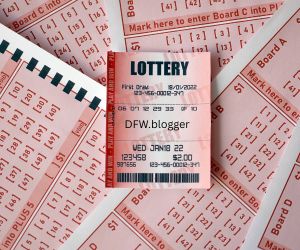 Powerball is a multistate game, which means ticket sales from participating jurisdictions contribute to jackpots that can reach extraordinary levels. Players choose five white-ball numbers and one red Powerball number. A ticket must match all five white balls and the Powerball to win the jackpot.
Powerball also offers several lower prize levels. Matching five white balls without the Powerball can still produce a major prize. An optional Power Play feature can multiply many non-jackpot prizes, depending on the rules and multiplier drawn.
The enormous jackpot is Powerball’s attraction, but the odds of winning it are correspondingly enormous. A player should understand that a $2 ticket is entertainment, not a financial plan.
Texas has seen spectacular Powerball wins. In September 2025, a jackpot-winning ticket worth an advertised $1.8 billion was sold in Fredericksburg. At the time, it was one of the largest lottery jackpots in history. Texas has also had many million-dollar Powerball winners who missed only the red Powerball.
One recent example came in San Antonio, where a resident claimed a $1 million prize after matching all five white-ball numbers but missing the Powerball in a January 2025 drawing. The difference between five correct white balls and all six required numbers was the difference between $1 million and a share of a $20 million jackpot. That sounds almost painful—until you remember the ticket was still worth $1 million.
In August 2026, a Powerball ticket sold in Dallas was reported as a $2 million winner. Lower-tier prizes such as these demonstrate why players should check every ticket carefully even when they know the jackpot was won somewhere else.
Mega Millions: Another Route to a Giant Jackpot
Mega Millions is the other major multistate jackpot game available in Texas. As of 2026, a Mega Millions play costs $5. Players choose five white-ball numbers and one gold Mega Ball number, or request a Quick Pick. The game includes a built-in multiplier for non-jackpot prizes under the current rules.
Like Powerball, Mega Millions can create jackpots that dominate the news. Texas made lottery history in 2024 when the Sol Living Trust claimed an $800 million Mega Millions jackpot from a ticket purchased in Sugar Land. The trust chose the cash-value option, which was hundreds of millions of dollars before federal taxes.
In another example, a Round Rock resident claimed a $1 million Mega Millions prize from the December 27, 2024 drawing. The ticket matched all five white balls but not the Mega Ball, narrowly missing a share of a $1.22 billion jackpot.
These “one number away” stories are a reminder that lottery prize tables have several levels. A ticket can be a major winner even when it does not win the advertised jackpot.
Texas Two Step
Texas Two Step is a Texas-only draw game that combines four regular numbers with one Bonus Ball. To win the jackpot, a ticket must match all four regular numbers plus the Bonus Ball. The game also pays lower prizes for partial matches.
Compared with Powerball and Mega Millions, the jackpots are smaller, but the game offers a different balance between ticket cost, jackpot size, and odds. Drawings are held twice a week under the current schedule.
In January 2025, a Houston resident claimed a $1.275 million Texas Two Step jackpot. The ticket had been purchased at a Houston-area retailer. For many players, a seven-figure Texas Two Step prize would be every bit as life-changing as a larger national jackpot.
Cash Five
Cash Five asks players to select five numbers. The top prize is $25,000 for matching all five, and there are lower prizes for matching fewer numbers. Under the current prize structure, matching two numbers can win a free Quick Pick, while matching three or four can win cash prizes.
Cash Five is popular with people who prefer a fixed top prize and frequent drawings over a jackpot that may roll for weeks. The advertised amount is nowhere near a giant Powerball jackpot, but the top-prize odds are significantly different because the game uses a smaller number field.
The appeal is easy to understand: $25,000 may not buy a private island, but it could pay off bills, replace a car, fund home repairs, or create a meaningful savings cushion.
Pick 3 and Daily 4
Pick 3 and Daily 4 are number games with several ways to play.
In Pick 3, players select three digits from 0 through 9. In Daily 4, they select four digits. Players may choose an exact-order wager, an any-order wager, or other available play types. An optional FIREBALL feature creates additional number combinations under the game’s rules.
These games hold multiple drawings Monday through Saturday, currently including morning, day, evening, and night drawings. They attract players who enjoy short number combinations, frequent results, and a choice of wager structures.
The flexibility also means players need to understand what they are buying. A straight or exact-order play generally requires every digit to appear in the exact chosen position. A box or any-order play allows the selected digits to appear in different positions, but the prize structure is different. Before purchasing, a player should read the official instructions or ask the retailer to make sure the ticket reflects the intended wager.
The Texas Lottery Winners Gallery has featured people who won substantial Daily 4 prizes. In May 2026, for example, a Dallas player identified as Prevenia was shown with a $250,000 Daily 4 prize.
All or Nothing: Win by Matching Everything—or Nothing
All or Nothing has one of the most interesting concepts in the Texas Lottery.
Players select 12 numbers from a field of 24. Twelve numbers are drawn. The top prize can be won in either of two opposite ways: match all 12 drawn numbers or match none of them.
That second possibility gives the game its name. In almost every other lottery game, matching nothing means losing. In All or Nothing, matching no numbers at all can win the same top prize as a perfect match.
The game currently costs $2 per play and has four drawings Monday through Saturday. The top prize is $250,000. There are also lower prizes for certain numbers of matches.
In May 2026, the official Winners Gallery featured Maher of Cypress with a $250,000 All or Nothing prize. In August 2026, another $250,000 winning ticket was sold in Buchanan Dam.
All or Nothing is a good example of how lottery designers can take the same basic ingredients—numbers, tickets, and random drawings—and create a game that feels entirely different.
Scratch-Off Tickets: Immediate Results and Constant Variety
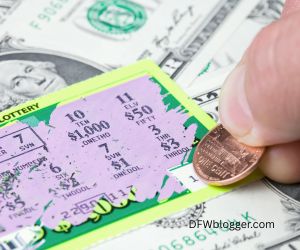 Scratch tickets are the most visible part of the Texas Lottery. They sit in dispensers and vending machines at thousands of retailers. The colorful designs change constantly, and prices can range from inexpensive tickets to premium games costing $50 or $100.
Some tickets are simple. Match one of “your numbers” to a winning number and you win the prize shown. Others contain multiplier symbols that can increase a prize. Crossword games require players to reveal letters and complete words. Bingo-style games use grids. Lotería games adapt the familiar picture-card format. Some tickets offer bonus spots, progressive play areas, second-chance promotions, or several independent games on one ticket.
The Texas Lottery’s active-game list provides information that every serious scratch-ticket player should examine:
Ticket price
Overall odds of winning any prize
Approximate number of tickets in the game
Number and value of prizes printed
Number of prizes claimed
Game start date
Whether the game is closing
The “prizes remaining” information matters because scratch games are produced in finite quantities. If a game began with six top prizes and five have already been claimed, only one may remain—assuming it has not been purchased and is sitting unclaimed somewhere. If all top prizes have been claimed, buying that game cannot produce the advertised top prize, even if lower prizes remain.
That does not mean a player can identify the location of a remaining winning ticket. Tickets are distributed across a large network, sold at different rates, and may sit in inventory or in somebody’s glove compartment. Prize-remaining data provides useful context, not a treasure map.
Understanding Scratch-Off Odds
Scratch tickets usually advertise “overall odds of winning any prize.” A game might state overall odds of 1 in 3.54, 1 in 3.99, or another figure.
That number does not mean every fourth ticket is guaranteed to win. Odds describe the entire production run. Winning and losing tickets are not necessarily distributed in a predictable sequence. A person can buy several losing tickets in a row, while another person may buy one ticket and win.
The phrase “any prize” can also include a break-even prize equal to the ticket price. If a $20 ticket wins $20, the ticket is technically a winner, but the player has not made a profit. Players interested in the financial picture should look beyond overall odds and review the complete prize table.
Consider several examples that were active in 2026:
The $20 game $1,000,000 Ca$h! listed overall odds of approximately 1 in 3.99.
The premium Millionaire’s Club game listed overall odds of approximately 1 in 3.54.
Texas Loteria listed overall odds of approximately 1 in 3.96.
Some $100 games advertised multimillion-dollar top prizes, but the ticket itself cost $100.
Better overall odds do not automatically make a ticket a better purchase. Ticket price, prize distribution, remaining prizes, and the player’s entertainment budget all matter.
Real Texas Scratch-Off Winners
Scratch tickets have produced many Texas millionaires. The winners often choose to remain anonymous, but the Texas Lottery typically announces the city of residence, the game, the prize, and the retailer that sold the ticket.
In December 2025, a Midland resident claimed a $1 million top prize in the $1,000,000 Crossword game. The ticket was purchased at an OXXO store on North Garfield Street in Midland. At that time, it was the third of six $1 million top prizes claimed in the game.
Also in December 2025, a Copperas Cove resident claimed a $1 million prize in the 500X game. The ticket came from Star Mart 15 on North First Street in Copperas Cove. It was the twelfth of fifteen $1 million top prizes claimed in that particular game.
In November 2025, a Katy resident claimed a $1 million top prize from the Million Dollar Loteria game. In October, an Inez resident claimed $1 million from Mega Jumbo Bucks after purchasing the ticket in Victoria.
Earlier in 2025, a Euless resident claimed a $3 million scratch-ticket prize. Other official releases reported million-dollar prizes claimed by residents of Seguin, Tahoka, Cameron, Grand Prairie, and Sugar Land.
One of the appealing things about scratch-ticket stories is their geographic variety. A major winner might come from Houston, Dallas, San Antonio, or Fort Worth, but it might just as easily come from a smaller community. Winning tickets can be sold at major grocery chains, independent convenience stores, truck stops, or neighborhood markets.
Of course, news releases focus on winners. They do not tell the stories of the enormous number of tickets that did not win a profit. Winner examples are real and exciting, but they should never be confused with the typical outcome of buying a ticket.
Lottery Pools: More Tickets, Shared Prizes
A lottery pool allows a group of people to combine money and buy tickets together. Coworkers, relatives, neighbors, and friends frequently create pools when a jackpot becomes large.
The advantage is obvious: the group can buy more combinations without any one member paying the full cost. If 10 people contribute $10 each, the pool can purchase $100 in tickets while each member risks only $10.
The equally obvious tradeoff is that every prize belongs to the group and must be divided according to the agreement. Ten people who share a $1 million prize do not each receive $1 million.
Pools can also create disputes if the rules are informal. Who is officially in the pool? Did someone forget to contribute this week? Are free-ticket winnings replayed? Does the person buying the tickets have personal tickets in the same envelope? What happens if the jackpot is won?
Anyone running a lottery pool should keep the arrangement simple and documented:
List the members participating in each drawing.
Record how much each person contributed.
State how prizes will be divided.
Photograph or copy the tickets before the drawing and share the images with all members.
Keep pool tickets separate from personal tickets.
Decide in advance whether small prizes will be distributed or used to buy more tickets.
For a substantial win, secure the ticket and obtain qualified legal and financial advice before anyone makes public announcements or promises.
My own pool story ended happily. We won more than $1,000, and the members who had criticized my multiples-of-five strategy suddenly loved it. But the experience also showed how emotional a pool can become before any money is won. Written rules protect friendships as much as they protect dollars.
What to Do If You Win
The first step is simple: protect the ticket. A paper lottery ticket is valuable only if it can be presented and validated. Follow the current instructions printed on the ticket and the official Texas Lottery claim guidance. Keep it in a secure place, away from heat, water, and anything else that could damage it.
Do not rely on social-media posts or a friend’s memory to determine whether a ticket won. Use an authorized retailer, the official ticket-checking options, or the official winning-number records.
Prize-claim procedures depend on the amount. Smaller prizes may be payable by retailers, subject to retailer cash availability and official limits. Larger prizes must go through a claim center or Texas Lottery headquarters. Under current guidance, all Lotto Texas, Powerball, and Mega Millions jackpot prizes—as well as prizes paid by annuity and prizes above designated thresholds—require special processing. Rules, locations, and limits can change, so winners should consult the official claim instructions that apply at the time.
For a large prize, slow down. Before quitting a job, making loans, posting online, or promising money to relatives, consider speaking with an attorney, tax professional, and financial adviser who have experience with sudden wealth. Lottery prizes can create tax obligations and attract attention. A careful plan is more valuable than a dramatic first week.
Texas generally allows certain lottery winners to remain anonymous if statutory requirements are met, but anonymity rules can be detailed and may depend on the prize and claim. A major winner should get current professional advice rather than assuming complete privacy.
Where the Lottery Money Goes
Every dollar spent on a lottery ticket is divided among prizes, retailer compensation, administrative expenses, and transfers for authorized state purposes.
The exact percentages vary by fiscal year and game mix, but the Texas Lottery reports that more than $43 billion has been generated for state causes since ticket sales began in 1992. Since 1997, the Foundation School Fund has been the primary beneficiary. Veterans’ programs also receive money from designated lottery activity.
It is fair to recognize those contributions while also remembering where the money begins: with players. Lottery revenue is not free money. It comes from millions of ticket purchases, most of which do not return more than they cost.
Playing for Entertainment, Not Income
The lottery can be fun. A few tickets can add excitement to a drawing, inspire conversation among coworkers, or create an unforgettable story like the night my pool won more than $1,000.
But a lottery ticket is not an investment. Investments are purchased with an expectation of long-term growth or income. Lottery tickets have a negative expected financial return because prize payouts must be less than total sales after retailer compensation, administration, and state transfers.
That does not mean nobody should play. People spend money on movies, concerts, sporting events, and other entertainment that has no financial return. The key is to treat the lottery the same way: decide what entertainment is worth, set a firm limit, and never spend money needed for rent, food, medicine, utilities, transportation, debt payments, or savings.
Never borrow money to play. Never chase a loss by buying more tickets. A losing streak does not make a winning ticket more likely to appear next. If playing stops feeling fun or creates financial stress, stop.
Texas Lottery tickets may only be purchased by adults who meet the state’s age requirement. Tickets should never be bought for minors.
Why Texans Keep Playing
People play for many reasons.
Some love the mathematics and track number histories even though past drawings cannot predict the next one. Some always play birthdays or family numbers. Some use Quick Pick because they do not want to make a choice. Some buy a single scratch ticket every Friday. Others play only when a national jackpot becomes enormous.
There is also a social side. Office pools create a shared fantasy. Family members compare tickets after dinner. Friends discuss what they would do with the jackpot. For a little while, everyone gets to imagine a different life.
The Texas Lottery offers enough variety to appeal to all of those personalities. Lotto Texas provides a homegrown rolling jackpot. Powerball and Mega Millions offer headline-making national prizes. Texas Two Step and Cash Five provide smaller targets. Pick 3 and Daily 4 offer frequent drawings and flexible wagers. All or Nothing turns losing logic upside down. Scratch-offs deliver instant results in dozens of themes and price points.
The games change. Scratch tickets open and close. Prize inventories decline. Jackpot amounts rise and reset. Rules and prices can be updated. Players should always check current official information before buying or claiming a ticket.
The Night Simple Numbers Won
When I think about the Texas Lottery, I still come back to that pool and my strange-looking number choices.
I can picture the reaction when everyone saw tickets built around 5, 10, 15, 20, 25, 30, 35 and 40. To them, the pattern looked too simple. They wanted numbers that looked scattered and unpredictable. They believed my picks were going to waste the pool’s money.
Then four of the six Lotto Texas numbers matched many of our combinations.
We did not become millionaires. We did not appear at a press conference holding an oversized check. But we won more than $1,000, which was plenty to turn an irritated group into a very happy one.
For one night, I was the lottery-pool genius.
The real lesson was not that multiples of five are lucky. It was that random drawings do not care what looks lucky or unlucky to us. A tidy pattern can be drawn. A messy-looking selection can lose. Quick Picks can win. Birthdays can win. The same number can appear again sooner than expected, and a number that seems overdue can remain absent.
Every valid combination is simply another possibility.
That uncertainty is what keeps the lottery interesting. Nobody knows what the next drawing will bring. Most tickets will not win much, some will win a little, and once in a great while a ticket will change a person’s life.
And sometimes, as my lottery pool discovered, 5, 10, 15, 20, 25, 30, 35 and 40 can make an ordinary fellow look like a genius.
Sources and Fact-Checking
Game rules, prize information, and examples were checked against official Texas Lottery materials available in August 2026. Because jackpots, active scratch games, prize inventories, schedules, and claim rules change, verify time-sensitive details before publication.
Responsible-play note: Lottery games are for adults 18 and older. Play for entertainment, set a budget, and never spend money needed for essential expenses.