Editor’s update: The first Republican midterm convention was held at American Airlines Center in Dallas on September 9–10, 2026. This cornerstone report looks at what happened, what national Republican leaders said, and what the gathering means for Dallas and the entire Dallas–Fort Worth Metroplex. 🇺🇸
Image note: The supporting graphics in this article are editorial illustrations created for DFW Blogger. They are not documentary photographs of specific speakers or moments.
Dallas Steps Onto the National Political Stage
For two days in September 2026, Dallas became the center of Republican politics. The gathering was not the usual presidential nominating convention that Americans see every four years. No presidential candidate was formally nominated, and no new national party platform was adopted. Instead, the Republican National Committee staged its first national midterm convention: part rally, part campaign launch, part fundraising event and part television production designed to energize voters before the November 3 midterm election.
That distinction matters. Calling it simply “the Republican National Convention” can make it sound like the 2028 presidential convention. It was actually the 2026 Republican Midterm Convention, held September 9 and 10 at American Airlines Center. The event still carried the scale, security, media attention and political symbolism of a major national gathering. President Donald Trump appeared on both nights, Vice President JD Vance delivered the second-night keynote, and national and Texas Republican figures used Dallas as their platform to argue that voters should preserve Republican control of Congress.
Dallas was more than a convenient backdrop. It supplied an arena, a recognizable skyline, two major airports, thousands of hotel rooms, a large donor community and a location in a state central to modern Republican politics. RNC Chairman Joe Gruters said during the planning stage that the president loved Dallas and that the area contained many friends and supporters of the party. He also described Dallas and Texas as winners because of the national attention the event would bring.
For the Metroplex, however, the story is larger than red-versus-blue politics. A national political event tests transportation, public safety, hospitality, communications and civic tolerance. It creates business for some hotels, drivers, restaurants, venues and contractors while producing congestion, closures, security costs and disruption for others. It can make the region look capable and confident, but it also attracts protests, criticism and intense scrutiny. Dallas did not merely host a party meeting; it hosted a compressed national debate about the direction of the country. 🏙️
What Kind of Convention Was This?
The 2026 event was unusual because American political parties normally reserve convention-scale spectacles for presidential election years. Midterm elections are fought through hundreds of separate House, Senate, governor and state races. The party holding the White House often loses congressional seats during a president’s first midterm. Republicans entered 2026 trying to break that historical pattern and maintain narrow control in Washington.
President Trump openly framed the Dallas gathering as a way to put his political identity into races even though his own name was not on the ballot. He urged supporters to behave as if he were running and argued that Republican congressional majorities were necessary to protect his administration’s program. The design of the event reflected that purpose: speeches celebrated administration policies, criticized Democratic candidates, promoted Republicans in competitive races and repeatedly presented the midterm as a national choice rather than a collection of local contests.
How It Differed From a Presidential Convention
- 🗳️ No presidential nomination: Delegates were not selecting a candidate for president or vice president.
- 📜 No full platform vote: The event promoted political themes but did not replace the party’s formal presidential-year platform process.
- 📣 A turnout mission: The central goal was to motivate Republican voters for House, Senate and state races.
- 💵 A fundraising opportunity: Candidates, party committees and aligned organizations could use the national gathering to cultivate donors.
- 📺 A media production: The arena setting supplied speeches, crowd shots and digital clips for national and local campaigns.
- 🤠 A Texas showcase: Dallas gave Texas candidates and elected officials a prominent place in the national Republican story.
The RNC promoted the convention as a first-of-its-kind event for either major party. Trump told the crowd that it could become a regular feature in future midterm cycles. Whether that happens will depend on election results, cost, fundraising and evidence that a centralized rally can improve turnout. Dallas therefore served as a political laboratory. If Republicans believe the meeting helped them, other cities may compete to host similar conventions in 2030 and beyond.
Who Attended the Dallas Convention?
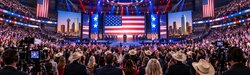
Organizers expected roughly 20,000 visitors, though an exact independently audited attendance total was not immediately available. The audience included elected officials, candidates, donors, party activists, invited guests, media personnel, security teams, vendors and local attendees. It was a national political gathering, but the Texas presence was unmistakable.
The two biggest names were President Donald Trump and Vice President JD Vance. Trump addressed the opening night and returned to close the event. Vance delivered the keynote on the second night, giving him a highly visible role both as the sitting vice president and as a figure frequently discussed in early 2028 presidential speculation. Chants of “JD 48” broke out during his appearance, a reference to supporters who would like him to become the 48th president. Vance smiled but redirected attention to the immediate midterm fight.
House Speaker Mike Johnson, Texas Governor Greg Abbott, Senator Ted Cruz, Attorney General Ken Paxton and other Republican officials and candidates were part of the broader political presence. RNC leaders used the stage to feature candidates from competitive races, while administration officials and allies defended the president’s record. Media reports also noted appearances by public figures and entertainers, including commentator and podcast host Adam Carolla.
Major Groups Represented
- National leadership: The president, vice president, congressional leaders, RNC officials and senior administration voices.
- Texas Republicans: Statewide officeholders, members of Congress, candidates, county leaders and grassroots activists.
- Battleground candidates: Republicans running in competitive House and Senate contests around the country.
- Donors and campaign professionals: Fundraisers, consultants, pollsters, digital strategists and political organizations.
- Issue advocates: Groups focused on immigration, taxes, energy, public safety, religious liberty and other conservative priorities.
- Press and content creators: National networks, newspapers, local television stations, radio hosts, podcasters and online personalities.
- Workers behind the event: Arena employees, hospitality staff, drivers, caterers, production crews, police officers and emergency personnel.
A surprising remote participant also became part of the post-convention conversation. Democratic Senator John Fetterman of Pennsylvania appeared in a short recorded video praising Republican Senator Dave McCormick and supporting efforts to protect Pennsylvania steel. He did not switch parties or attend as a Republican delegate, but the cross-party clip gave organizers a moment designed for social media and national coverage.
What President Trump Said in Dallas
Trump’s speeches placed him at the center of the Republican midterm message. On the first night, he welcomed the audience to what he called the first midterm convention held by any party. He argued that Republicans should make the election a referendum on his administration and that his supporters should turn out even though he was not personally on the ballot.
The most widely reported proposal was a promised $5,000 “Trump Dividend” for every adult American if Republicans retained both chambers of Congress. Trump said the money would be connected to government revenue and would have to be spent in the United States. The announcement generated immediate enthusiasm in the arena and immediate questions outside it: how eligibility would work, what the total cost would be, whether Congress would approve it, what revenue would fund it and whether a payment of that scale could increase the deficit or inflation.
Speaker Mike Johnson later clarified that Congress would have to authorize such payments. The Associated Press estimated that a broad payment to American adults could cost more than $1 trillion, depending on the details. That means the idea should be understood as a campaign proposal, not as an approved benefit or a check already scheduled for distribution. 💵
Trump also defended his administration’s foreign policy and the war in Iran, promoted tariffs and domestic manufacturing, claimed progress on prescription-drug prices, emphasized border enforcement and promised a tougher approach to crime. He attacked Democratic candidates as extreme and repeatedly argued that Republican losses in Congress could reverse his agenda.
Trump’s Central Messages
- Republican voters should “pretend” he is on the ballot and vote in large numbers.
- GOP control of Congress is necessary to enact and preserve the administration’s agenda.
- Tariffs and industrial policy should protect American production and generate revenue.
- Border control and deportation policies should remain central Republican priorities.
- Federal policy should take a harder line on violent crime, cashless bail and capital punishment.
- The administration’s foreign-policy decisions should be viewed as demonstrations of strength.
- Democrats should be portrayed as ideologically far outside the political mainstream.
The speeches blended policy, campaign rhetoric, entertainment and personal storytelling. Supporters saw a confident president trying to transfer his voter coalition to congressional candidates. Critics saw an event centered too heavily on one personality and questioned the feasibility or accuracy of several claims. For readers trying to understand the convention rather than simply cheer or condemn it, both reactions are part of the story.
What Vice President JD Vance Said

Vance’s second-night keynote was one of the convention’s most closely watched moments. He used the speech to rally voters behind Republican congressional candidates, defend the administration and attack Democratic positions. He also demonstrated why many Republicans view him as a possible heir to Trump’s political movement.
His immediate assignment was the 2026 election, not 2028. Vance argued that Republican voters must stay united and turn out to protect the party’s majorities. He emphasized immigration, cultural conflict, economic nationalism and support for working families. Like other speakers, he portrayed the election as a stark national choice and warned that Democratic control of Congress would obstruct or reverse the administration’s policies.
The spontaneous “JD 48” chant revealed another layer of the gathering. A midterm convention designed to preserve power in 2026 also became an early stage for the party’s post-Trump future. Vance was not the only Republican discussed by attendees as a possible 2028 contender; other names in the broader conversation included Senator Marco Rubio, Senator Ted Cruz and Governor Ron DeSantis. Still, the vice president’s prime speaking position gave him an advantage no ordinary potential candidate could match.
Vance’s challenge was to honor Trump’s leadership without making the convention appear to be an unofficial 2028 launch. His response to the chant—acknowledging it with a smile, then returning to the midterms—illustrated that balancing act. For Dallas, this meant the city hosted not only a campaign rally for 2026 but also one of the earliest visible moments in the next presidential succession debate.
Why Vance’s Appearance Mattered
- 🎤 It gave the vice president a national prime-time platform.
- 🔗 It tied congressional candidates to the administration’s message.
- 🧭 It displayed a possible direction for the Republican Party after Trump.
- 🗓️ It introduced 2028 speculation without formally beginning a presidential campaign.
- 📱 It created shareable moments that could circulate long after the arena emptied.
What Texas Leaders and Other Republicans Emphasized
Texas officials had a natural home-field advantage. Governor Greg Abbott and other state Republicans could present Texas as a model of lower taxes, business recruitment, energy production, border enforcement and conservative governance. Senator Ted Cruz and Attorney General Ken Paxton brought their own national profiles, while candidates in Texas races benefited from access to donors, activists and media.
The gathering came during a competitive Texas political season. Republicans were defending statewide power and seeking gains in congressional districts redrawn to be more favorable to the party. Democrats, meanwhile, viewed Dallas County and the fast-changing suburbs as essential to their own turnout strategy. A Republican convention in downtown Dallas therefore carried a useful political tension: it took place inside a Democratic-leaning county at the heart of a region where suburban voters can determine statewide margins.
House leaders emphasized preserving the congressional majority. Speaker Johnson and other members presented Republican control as the legislative bridge between Trump’s promises and actual law. That point became especially important after the proposed $5,000 dividend. Presidents can set an agenda and use executive authority, but spending on that scale normally requires legislation. The convention’s emotional message—win Congress to protect Trump’s program—was reinforced by a practical constitutional reality.
Other speakers defended the administration on the economy, energy, foreign affairs, public safety and immigration. A repeated slogan cast the election as a contest between Republican “common sense” and what speakers called radical or communist Democratic ideas. That language was designed to create a simple, repeatable contrast across many races. It also drew strong criticism from Democrats and civil-rights voices who argued that some attacks, particularly those aimed at Muslim candidates, crossed from policy disagreement into prejudice.
A responsible cornerstone report should not repeat every applause line as established fact. The Associated Press published a fact-check after the convention identifying false or misleading claims involving the economy, jobs, health care and the 2020 election. Readers can recognize the strategic power of a message while still checking whether evidence supports it. 🔎
The National Political Points Promoted at the Convention
The Dallas convention did not formally enact a new national platform, but it clearly advertised a set of policy and campaign priorities. These points are best understood as the messages Republican leaders wanted voters to carry into the 2026 midterms.
1. Preserve Republican Control of Congress 🏛️
The main political point was simple: keep the House and Senate in Republican hands. Speakers argued that congressional control would allow the administration to pass spending and tax measures, confirm nominees, conduct oversight and block Democratic legislation. They warned that divided government would produce investigations, stalemate and possible reversal of executive actions.
2. Make the Midterms a Referendum on Trump
Republicans have sometimes struggled to reproduce Trump-level turnout when he is not on the ballot. The convention attempted to solve that problem by attaching his presence, language and promises to hundreds of other candidates. Trump’s request that voters act as if he were running was the clearest expression of the strategy.
3. Immigration and Border Enforcement 🚧
Speakers promoted stricter border enforcement, deportation of people in the country unlawfully and limits on policies they described as sanctuary protections. Texas provided a powerful setting for that message because border policy has dominated state and national politics. Supporters described the approach as necessary for sovereignty, public safety and labor-market fairness. Opponents raised concerns about due process, family separation, economic disruption and rhetoric that can stigmatize lawful immigrants.
4. Law and Order
Trump promised action against cashless bail and supported broader use of the federal death penalty in eligible cases. Republicans argued that Democratic policies had weakened public safety and that federal and local authorities should prioritize victims and police. Critics countered that bail policy is largely state and local, that detaining people solely because they are poor can be unjust, and that crime claims require careful comparison with official data.
5. Tariffs, Manufacturing and Economic Nationalism 🏭
The convention celebrated tariffs and policies intended to shift production toward the United States. Republicans argued that trade policy should protect American factories, steel, strategic industries and supply chains. The Fetterman video praising efforts on Pennsylvania steel helped organizers present industrial policy as capable of crossing party lines. Businesses and economists remain divided because tariffs can help protected producers while raising costs for importers and consumers.
6. A Proposed $5,000 Dividend
Trump’s proposed payment became the most concrete and controversial convention promise. The political appeal is obvious: voters would share directly in revenue the administration says its policies are generating. The unanswered policy questions are equally important. Congress would need to define eligibility, funding, timing, tax treatment and enforcement of any domestic-spending requirement. Until legislation exists, readers should treat the dividend as a campaign proposal.
7. Energy Production and Lower Costs ⚡
Republicans promoted expanded domestic energy production and blamed Democratic environmental policies for higher prices and weaker growth. In Texas, energy language reaches far beyond oilfields. The Metroplex includes corporate offices, engineering firms, pipelines, electricity companies, data centers and transportation businesses whose costs depend on reliable power. The argument also has a global dimension because wars, sanctions and commodity markets affect prices regardless of domestic policy.
8. Prescription Drugs and Health Care
Trump highlighted efforts to lower prescription-drug prices and promoted agreements intended to bring American prices closer to those paid in other developed countries. Republicans presented affordability as part of a working-family agenda. Health-policy claims were among those receiving scrutiny after the event, making it important to distinguish announced goals from savings actually experienced by patients.
9. Military Strength and Foreign Policy 🌎
The president defended the war in Iran and portrayed Republican leadership as more willing to use American power. Speakers argued that strength deters enemies and protects national interests. Critics questioned costs, strategy, casualties and the risk of escalation. The convention showed that foreign affairs—often secondary in midterms—could remain central in 2026 because overseas conflict affects security, gasoline prices, federal spending and public confidence.
10. Cultural and Educational Issues
Republican rhetoric continued to focus on parental rights, school policy, gender, religious liberty and opposition to diversity programs viewed as ideological. These subjects help motivate core voters, but they also intensify disagreement in a diverse metropolitan area. DFW includes conservative exurbs, Democratic urban centers, politically mixed suburbs and large immigrant communities. National cultural messages can therefore land very differently from one neighborhood to the next.
What the Convention Meant for Dallas Hotels, Restaurants and Workers
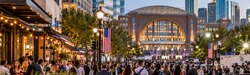
Before the event, local reports said the convention could fill more than 5,000 hotel rooms and bring about 20,000 visitors. Those projections created understandable optimism among downtown hotels, restaurants, bars, transportation companies and temporary workers. A visitor does more than buy an arena ticket. A multi-day trip can include airfare, lodging, meals, drinks, parking, rides, shopping, security, production services and entertainment.
The benefits were not distributed evenly. Hotels received a clear lift, but post-event reports described mixed results for some downtown restaurants and bars. That is common with highly secured events. Delegates may eat at private receptions, remain inside controlled zones or use hotel catering. Street closures can discourage ordinary customers. A restaurant located near the crowd may enjoy a rush, while another only a few blocks away may lose its usual lunch traffic.
Businesses Most Likely to Benefit
- 🏨 Downtown and Uptown hotels, including meeting and banquet operations
- 🍽️ Restaurants, caterers, bars and private-event venues
- 🚕 Taxi, rideshare, limousine, charter-bus and rental-car providers
- 🎥 Audio, lighting, video, staging and broadcast-production companies
- 🛡️ Private security, credentialing and event-management contractors
- 🌺 Florists, printers, sign makers, decorators and promotional-product vendors
- 🎭 Musicians, entertainers, speakers and reception talent
- 🧹 Cleaning crews, temporary staff and logistics workers
For DFW’s small businesses, the lesson is preparation. Large events often book vendors weeks or months in advance, and much of the spending occurs through planners rather than walk-in traffic. Businesses with convention packages, fast estimates, proper insurance and dependable staffing are more likely to win contracts. Local directories and media outlets can help by publishing practical guides early: where to stay, where to eat, how to travel, what roads will close and which locally owned companies can serve groups.
The true economic impact should be measured after the event, not inferred from attendance alone. Analysts distinguish gross visitor spending from net new benefit. Some spending replaces normal activity, some leaves the region through national companies, and public expenses reduce the gain. Even so, filling thousands of rooms during a two-day national gathering represents meaningful revenue for the hospitality sector.
The Cost of Security and Street Closures
Dallas estimated about $1.8 million in police costs before the convention, while broader public expenses were reported at more than $2 million when other services were included. The bulk involved security. A sitting president and vice president require federal protective operations, and a major partisan event also demands crowd management, traffic control, emergency planning and protest zones.
American Airlines Center sits in a busy part of the city near Victory Park, downtown, Uptown, hotels, restaurants, offices and transit. Securing the area affected streets and movement around the arena. Motorcades temporarily altered traffic beyond the immediate venue. Businesses and residents had to plan for delays, barriers, parking restrictions and changing access points.
Public cost does not automatically mean public waste. Security is a basic responsibility when a city hosts national leaders and thousands of visitors. But taxpayers deserve a clear accounting. Useful questions include:
- How much was paid by Dallas, the RNC, federal agencies or private organizers?
- Were officers working overtime, reassigned from normal duties or brought in through partner agencies?
- What costs were reimbursable?
- How did closures affect sales, deliveries and residents?
- What lessons can reduce the expense of the next major event?
The city’s after-action review may be more valuable than a promotional economic-impact number. Dallas regularly hosts major sports, concerts, trade shows and international visitors. Every high-security event can improve coordination among police, fire, DART, venue operators, hospitals, hotels and federal agencies. Those capabilities will matter as North Texas prepares for future global sporting events and continued population growth.
Transportation Across the Metroplex
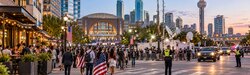
DFW’s transportation system was one reason Dallas could host the convention. Dallas Fort Worth International Airport connects North Texas to domestic and international destinations, while Dallas Love Field offers convenient access near the city center. Interstate highways, toll roads, DART rail, Trinity Railway Express, rideshare services and hotel transportation gave visitors multiple choices.
American Airlines Center is particularly suitable because it is next to Victory Station, served by DART Rail and the Trinity Railway Express. That allows some visitors from downtown Dallas, Fort Worth, Irving and airport connections to avoid driving into the most restricted area. Public transit cannot eliminate disruption, but it gives planners flexibility that a remote arena would not provide.
The convention also exposed the Metroplex’s transportation challenge: the region is enormous, decentralized and dependent on automobiles. A visitor staying in Fort Worth, Arlington, Frisco or Plano can face a long trip to downtown Dallas. Motorcades and closures can worsen already unpredictable travel times. Clear communication becomes essential. Visitors need exact station, parking and security-entry information; residents need advance notice rather than discovering a closure during a commute.
A Practical Transportation Scorecard
- ✈️ Air access: A major strength because DFW Airport and Love Field provide extensive service.
- 🚆 Venue transit: A strength because Victory Station sits beside the arena.
- 🚗 Regional driving: A mixed result because distances and congestion remain significant.
- 🚧 Security closures: Necessary but disruptive, especially when schedules change.
- 📲 Public information: Critical for moving both delegates and ordinary residents.
Future event bids should treat transportation communications as part of hospitality. A visitor’s impression of Dallas may depend less on the skyline than on whether that visitor could get from the airport to the hotel and from the hotel to the arena without confusion.
Dallas, the Suburbs and the Political Geography of DFW
The convention’s location highlighted the political complexity of North Texas. Dallas County has voted Democratic in recent presidential elections, while many outer counties and exurban communities remain strongly Republican. Tarrant County is competitive. Collin and Denton counties have experienced rapid growth and changing margins. The result is not one political personality but a patchwork of urban, suburban and exurban communities.
Hosting a Republican gathering in Dallas could energize party supporters throughout the region. Activists from surrounding counties could attend, volunteer, meet candidates and share content. Donors could connect with national campaigns. Local candidates could associate themselves with the president and vice president. The convention could also energize Democrats, particularly in Dallas County, by giving opposition groups a highly visible organizing target.
That two-sided effect is important. Political events do not only motivate the party onstage. They help opponents raise money, recruit volunteers and frame their own message. Demonstrations during the convention showed that national attention creates a platform for dissent as well as support.
Suburban voters may be the most closely watched audience. Many care about taxes, schools, crime, roads, housing, health care and the cost of living but do not identify fully with either party’s loudest rhetoric. Republicans hope messages about the economy, border and public safety will pull these voters toward GOP candidates. Democrats hope concerns about presidential power, foreign policy, abortion, tariffs and divisive language will move them in the opposite direction.
For the Metroplex, the convention was therefore both an event and a mirror. It reflected the region’s economic confidence, political diversity and rapid demographic change. Dallas could host the Republican Party at night while remaining the center of a county where many voters oppose its agenda. That is not a contradiction. It is what civic space looks like in a large democracy.
Protests, Free Speech and Civic Responsibility
Major political conventions attract demonstrations. Dallas prepared designated areas and security measures while protesters gathered to oppose the administration and specific policies. The presence of disagreement should not be treated as a failure of hospitality. Peaceful protest is part of the same constitutional system that protects a political party’s right to assemble inside the arena.
The city’s job was difficult: protect the president, delegates, police, journalists, workers, protesters and bystanders without unnecessarily suppressing speech. Organizers and demonstrators also carried responsibilities. Heated language can attract attention, but threats and violence endanger people and damage the speaker’s cause. Accurate information about entrances, barriers and permitted areas reduces the chance that confusion turns into confrontation.
Standards for a Successful Civic Response
- 🕊️ Protect peaceful speech regardless of political viewpoint.
- 🛡️ Maintain secure access for attendees, workers and emergency vehicles.
- 📷 Allow journalists to document public events and law-enforcement activity.
- ⚖️ Apply rules consistently rather than favoring supporters or opponents.
- 📢 Communicate restrictions early and clearly.
- 🤝 De-escalate conflict whenever possible.
Dallas carries historical memories of political violence and national tragedy, which makes competent civic management especially important. A peaceful event does more for the city’s reputation than any slogan. It tells future organizers that Dallas can host passionate disagreement while keeping the public safe.
National Media Attention: Opportunity and Risk
For two days, Dallas appeared in headlines, live broadcasts, political commentary, social clips and photographs across the country. The arena, skyline, cowboy hats and Texas symbolism created a visually distinctive event. That exposure has value. Viewers who have never visited North Texas saw a modern city capable of handling a national gathering.
Yet media attention cannot be controlled. Coverage focused heavily on Trump’s $5,000 proposal, the war in Iran, attacks on Democrats, Vance’s possible future, fact-checks, protests and political theater. Local tourism messages were secondary. A host city receives the spotlight, but the event’s news determines the color of that spotlight.
Dallas leaders should therefore evaluate exposure realistically. The convention was not a tourism commercial, even if it generated tourism. Its long-term branding value depends on what viewers remember: an impressive venue, orderly streets and a recognizable skyline—or controversy, congestion and confrontation. Most likely, audiences saw some of each.
Local media had an especially important role. National outlets naturally focused on the biggest personalities and election consequences. DFW reporters could examine hotel occupancy, police costs, closures, protests, small-business results and neighborhood effects. That local reporting turns a national spectacle into useful information for residents.
What the Convention Says About Dallas as an Event City
Dallas has long marketed itself as a place that can handle big business, large crowds and complicated logistics. American Airlines Center, Kay Bailey Hutchison Convention Center Dallas, AT&T Stadium in Arlington, Globe Life Field, major hotels and two airports give the region extraordinary capacity. The Republican midterm convention added a high-security political event to that record.
Convention organizers look for more than floor space. They need hotel inventory, transportation, catering, communications infrastructure, medical access, security partners and local fundraising support. Dallas checks those boxes. The region’s central location and airline network can reduce travel complexity for a national audience.
Success could help North Texas compete for future political gatherings, corporate meetings, religious conferences, international events and major media productions. The value is cumulative. Each event trains workers, tests systems and demonstrates capacity to the next organizer.
There are also lessons. Downtown businesses need better ways to connect with controlled convention spending. Residents need earlier road information. Public agencies need transparent cost and reimbursement reports. Event organizers should make local vendor participation measurable rather than merely promised. Accessibility, transit and protest planning should be reviewed after every event.
Questions Dallas Should Ask Next
- How many visitors actually came, and how many hotel room nights were booked?
- What was the net public cost after reimbursements?
- How much business went to locally owned and minority-owned companies?
- Which restaurants and districts gained or lost traffic?
- How effectively did DART and regional transportation serve visitors?
- What security and communication improvements are needed?
- Would Dallas bid for another national political convention?
Benefits and Drawbacks for the Metroplex
A cornerstone analysis should resist declaring the convention entirely good or entirely bad for DFW. The result depended on where a person worked, lived and stood politically.
Potential Benefits ✅
- Thousands of visitors purchased rooms, meals, transportation and services.
- Dallas received extensive national and international exposure.
- Local workers and contractors gained short-term event income.
- Political donors, candidates and organizations built relationships in North Texas.
- Public agencies practiced high-level security and emergency coordination.
- The event reinforced the region’s ability to host complex national gatherings.
Potential Drawbacks ⚠️
- Security required significant public spending.
- Closures and motorcades disrupted commuters, residents and deliveries.
- Some restaurants and retailers may have lost normal customers.
- Partisan conflict can affect the city’s image among supporters and opponents.
- Gross spending estimates may overstate the net local economic benefit.
- Intense rhetoric can strain relationships in a politically and culturally diverse region.
The most defensible conclusion is that the convention delivered a concentrated hospitality boost and major publicity, accompanied by real costs and uneven business results. Its longer-term value will depend on what Dallas learns and whether exposure produces future bookings.
What It Means for Local Businesses and DFW Blogger
National events create a temporary information economy. Visitors search for hotels, restaurants, parking, transit, entertainment, history and local services. Residents search for closures, schedules, security rules and protest information. Media teams need locations, crews, equipment and background knowledge. A local publication can connect those needs.
For DFW Blogger, the opportunity is to become a useful regional guide rather than another source of partisan shouting. That means explaining what happened, checking claims, showing local impact and linking readers to authoritative sources. It also means producing evergreen companion stories that remain valuable after the political news cycle ends.
Cornerstone Topics to Link From This Article
- 📍 A visitor’s guide to Victory Park and American Airlines Center
- 🚆 How to use DART and Trinity Railway Express for major events
- 🏨 Best convention hotels in downtown Dallas and Uptown
- 🍴 Locally owned restaurants near the arena
- 🏛️ The history of national political conventions in Dallas
- 🗺️ How Dallas County and the DFW suburbs vote
- 🎙️ A DFW Blogger podcast recap of the speeches and local impact
Local businesses can prepare for the next event by maintaining accurate websites, publishing group capacity, responding quickly to inquiries and building relationships with hotels and planners. A photographer should list event credentials and turnaround times. An entertainer should offer reception packages. A transportation company should publish fleet sizes. A restaurant should explain private dining and buyout options. The companies that make buying easy often beat those that simply wait for traffic.
Fact-Checking the Biggest Claims
Political conventions are designed to persuade, not to provide neutral policy seminars. Speakers select favorable statistics, compress complicated issues and use language intended to generate emotion. That does not mean every claim is false. It means readers should separate four categories:
- Verified facts: dates, official actions, enacted laws and reliably measured outcomes.
- Policy proposals: ideas that require future legislation, funding or rulemaking.
- Predictions: statements about what will happen if a party wins or loses.
- Political opinions: judgments about success, failure, extremism or national direction.
The $5,000 dividend belongs in the proposal category. It was announced from the stage, but Congress had not approved a payment plan. Claims about the economy require context such as inflation, wages, employment revisions, interest rates and the period being compared. Claims about crime should be matched with official data and should distinguish national trends from local conditions. Claims about drug prices should measure actual patient costs, not only announced agreements.
AP’s post-convention fact-check found misleading or false statements on several topics. Readers should consult primary documents and multiple credible news organizations rather than relying only on a speaker, campaign advertisement or social-media clip. DFW Blogger can serve readers best by linking the speech and the check side by side.
The 2028 Question Hanging Over a 2026 Convention
Although the convention focused on the midterms, attendees and reporters inevitably looked toward 2028. Trump cannot simply transfer personal loyalty to a successor, and Republican voters will eventually decide what parts of his movement continue. Vance’s prominent role and the “JD 48” chant made that future visible.
A potential 2028 contest could include figures associated closely with Trump as well as Republicans offering a different style. The Dallas convention did not settle that question. It showed who currently commands the stage and who may be positioned near it.
Dallas could benefit from that early political association. Candidates and organizations may return to North Texas for donor events, policy speeches and rallies. The region’s growing population, media market and business leadership make it valuable to both parties. Texas is also rich in convention-sized venues, meaning future national gatherings will continue to consider the state.
But residents should avoid confusing the 2026 event with the eventual 2028 Republican National Convention. The Dallas gathering nominated no presidential candidate. Any future host decision and convention schedule would be separate.
Frequently Asked Questions
When was the Republican convention in Dallas?
The Republican Midterm Convention took place on September 9 and 10, 2026, at American Airlines Center in Dallas.
Was this the 2028 Republican National Convention?
No. It was a special midterm convention focused on the November 2026 elections. Delegates did not nominate a presidential candidate.
How many people attended?
Organizers and local reports expected about 20,000 visitors. That figure was an estimate, and it should not be treated as a final audited attendance count unless organizers publish one.
Who were the main speakers?
President Donald Trump appeared both nights, and Vice President JD Vance delivered the second-night keynote. National party officials, congressional leaders, administration voices, Texas officeholders and Republican candidates also participated.
What was the biggest announcement?
Trump proposed a $5,000 payment to adult Americans if Republicans maintained control of Congress. Speaker Mike Johnson said congressional authorization would be required. No reader should assume that a payment has been approved.
What did it cost Dallas?
Before the event, Dallas estimated approximately $1.8 million for police security. Reports placed broader city costs above $2 million. Final net cost may change with reimbursements and post-event accounting.
Did Dallas businesses benefit?
Hotels received a convention-related boost, with projections of more than 5,000 rooms. Results for restaurants and bars were mixed because private events and security restrictions concentrated spending and sometimes displaced normal traffic.
Why did Republicans choose Dallas?
Dallas offered a large arena, strong air service, hotel capacity, transit access, a major media market and a substantial network of Republican supporters and donors. Texas also gave the event symbolic value.
Were there protests?
Yes. Demonstrations occurred as opponents of the administration used the national spotlight to express their views. Security planning included street restrictions and controlled areas around the venue.
What Happens After the Arena Lights Go Dark?
The political test comes on Election Day. If Republicans preserve their congressional majorities, party leaders may credit the convention with increasing enthusiasm and strengthening fundraising. If they lose, strategists will ask whether a large national rally helped, made little difference or placed too much attention on Trump rather than individual candidates.
The Dallas test is different. The city should track hotel nights, sales activity, public costs, transit use, arrests or incidents, local contracts and media reach. It should gather feedback from residents and businesses, including those that did not benefit. A careful review can make the next national event smoother and more profitable.
For the Metroplex, the convention confirmed something residents already know: North Texas is no longer merely a regional center. It is a national stage. Companies relocate here, sports organizations schedule global events here, political campaigns raise money here and millions of people connect through the region’s airports. That status creates opportunities and responsibilities.
Hosting does not equal endorsing. A city can welcome Republicans, Democrats, business associations, religious groups, labor organizations and international visitors while protecting public safety and free speech. The capacity to host disagreement is a mark of civic confidence.
Final Assessment: What the Republican Convention Meant for DFW
The Republican Midterm Convention made Dallas the center of American politics for two intense days. It brought President Trump, Vice President Vance, national party leaders, candidates, donors, activists, protesters and media organizations into the heart of the city. It filled hotel rooms, created work, disrupted traffic, required costly security and generated headlines far beyond Texas.
Nationally, the convention delivered a clear strategy: make the 2026 midterms about Trump, portray Democratic candidates as extreme, defend the administration’s record and promise voters direct benefits if Republicans retain Congress. The policy themes included immigration enforcement, law and order, tariffs, manufacturing, energy, drug prices, military strength and cultural issues. The $5,000 dividend dominated discussion, but it remained an unapproved proposal requiring congressional action.
Locally, the event demonstrated both the power and limits of convention economics. Thousands of visitors can lift hotels and create contracts, yet secure zones do not guarantee that every nearby business prospers. Publicity can strengthen Dallas’s reputation as an event city, but political controversy becomes part of the image. Security protects the gathering, but taxpayers deserve transparency about cost.
The broader lesson is that Dallas–Fort Worth matters. Its airports, venues, hotels, companies, donors, population and political diversity make it essential territory in national life. The convention did not transform the Metroplex overnight. It revealed the scale and influence the region already possesses.
Whether a resident celebrated the gathering, protested it or tried to avoid the traffic, the convention belonged to the history of Dallas. The arena emptied, the motorcades departed and campaign season continued. What remains is a sharper question for North Texas: how should a rapidly growing, politically diverse metropolitan region use its national influence? The answer will shape far more than one party or one election. 🇺🇸🤠🏙️
Sources and Further Reading
- The Texas Tribune: Announcement and planning for the Dallas convention
- The Texas Tribune: Convention recap and Texas political context
- Associated Press: Opening-night report and major announcements
- Associated Press: Final-night report
- Associated Press: Fact-check of convention claims
- American Presidency Project: Transcript of Trump’s first-night remarks
- FOX 4 Dallas–Fort Worth: Security plans, street closures and projected police cost
- Bisnow: Hotel-room and hospitality projections
Published by DFW Blogger. Facts and estimates should be updated if organizers or the City of Dallas release final attendance, economic-impact or reimbursement reports.