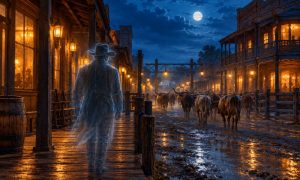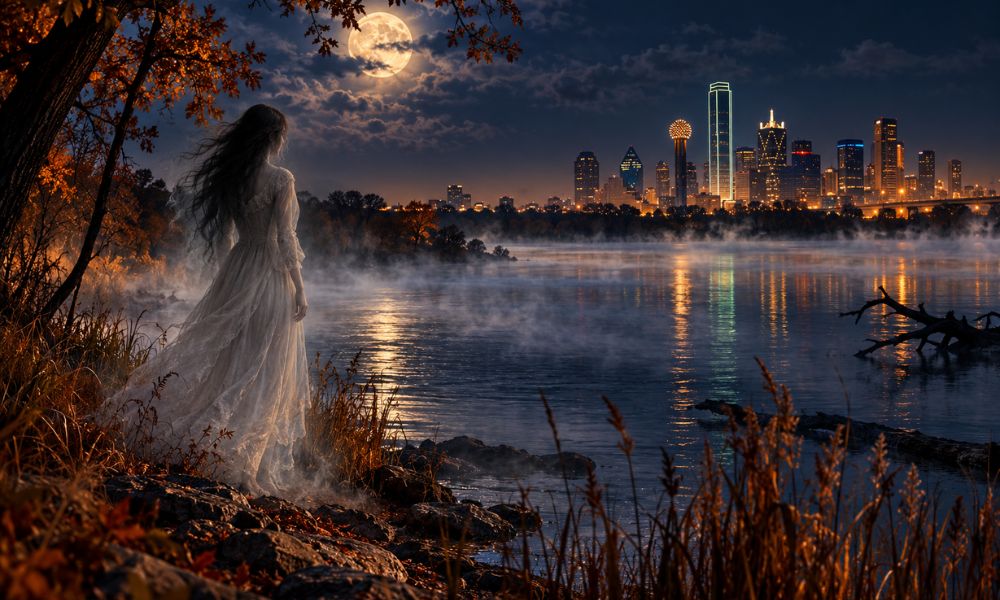
DFW haunted places range from elegant Dallas hotels and Fort Worth Stockyards buildings to quiet libraries, old houses, wooded trails, lakes, and bridges. Some stories begin with documented history. Others survive because generations of North Texans enjoy telling them. A useful guide needs room for both, while making the difference clear.
This guide brings together 37 notable locations and connected stories across Dallas, Fort Worth, Arlington, Denton, McKinney, Grapevine, and Waxahachie, with regional side trips to Granbury and Mineral Wells. It covers reported hauntings and one famous creature legend. It does not claim to list every private-house rumor in the Metroplex or to prove that any place is haunted. Those would be promises no researched article could keep.
The appeal is more than a scare. A ghost story can send you into a bookstore you have never visited, a theatre you have driven past, or a historic neighborhood whose older buildings suddenly become interesting. You can enjoy that discovery whether you believe in spirits, remain skeptical, or simply like a good story.
Research checked October 6, 2026. Visitor access can change. Important updates include the Stockyards Hotel renovation, the closed arts-center setting of Scott Theatre, and fire damage at the former Catfish Plantation property. Check the linked operators before making plans.
How to Use This DFW Haunted Places Guide
Each entry separates the reported story from practical visiting advice. A source link shows where the historical information or folklore comes from. Tourism agencies and venue owners can document that a story is being told without proving the events described in it. A quoted witness, a promotional ghost-tour page, and a historical record are different forms of evidence.
The map links locate the named property or an appropriate public destination. The directions links let you supply your starting point. At locations with disputed geography, such as Screaming Bridge, the map deliberately points to the associated public park rather than pretending to identify a vanished structure. A map pin never grants permission to enter land or buildings.
Use the guide in small geographic groups. Dallas and Fort Worth are not neighboring blocks, and attempting the entire list in one night would turn an enjoyable outing into a tiring drive. Choose a few places, verify that they are available, and leave time for a meal, performance, or leisurely walk.

Jump to a Region
Haunted Places in Dallas
1. White Rock Lake: The Lady of the Lake
A wet dress, a request for a ride, and an empty back seat: few Dallas ghost stories are as recognizable as the Lady of White Rock Lake. In the familiar telling, a driver helps a distressed young woman reach an address she supplies. Before they arrive, she disappears. The family at the destination explains that the woman died years earlier. The lake’s preservation and community organizations describe the account as a changing local legend, with a published version dating to 1943.
The strongest part of this story is its ordinary beginning. The driver does something kind. The impossible discovery comes later, when an apparently straightforward encounter no longer makes sense. It is easy to understand why families kept retelling it: the tale fits comfortably into a conversation about an evening drive, a familiar shoreline, or a place grandparents remember.
Visit for the landscape as well as the legend. Choose an established lakeside parking area, walk a manageable section of trail, and watch how reflections change as the light fades. This is not a search for a verified accident site. There is no single agreed location where the apparition must appear, and private addresses from different versions should never become sightseeing stops.
Visiting note: Public park; use designated parking and posted hours.
View location map | Get directions from your location
History and story sources: City of Dallas: White Rock Lake history and legend; For the Love of the Lake: Lady of the Lake.
2. Flag Pole Hill: Stories Above White Rock Lake
Flag Pole Hill appears in regional ghost lists because of stories about unseen forces throwing rocks. Treat that claim as neighborhood folklore, not an established explanation for an incident.
This stop works best as a companion to White Rock Lake. Changing elevation changes the way you experience a place: what felt enclosed beside the water can feel open and exposed on higher ground. Wind, branches, distant traffic, and the gradual disappearance of daylight create an atmosphere without requiring anything supernatural. A storyteller can use that setting while acknowledging that the story itself remains unverified.
Make your visit a normal park outing. Bring a picnic, photograph the sky, and compare the hill’s mood with the lakeshore below. Avoid wandering into surrounding yards or treating a nearby house as part of the legend merely because it looks old. If something actually strikes a person or vehicle, respond as you would to a real safety problem. A ghost story should never distract from checking for people, falling debris, or other ordinary causes.
Visiting note: Public park; stay on public grounds.
View location map | Get directions from your location
History and story sources: Arlington Convention & Visitors Bureau: Haunted spots in DFW.
3. Coombs Creek Trail: The Vanishing Bicycle Rider
One Coombs Creek story describes a little girl on a bicycle who vanishes. Its identity and accident details are unverified. Dallas Parks identifies the trail as part of North Oak Cliff’s creek landscape.
The bicycle makes the legend unusually close to everyday neighborhood life. Instead of a grand hotel ballroom or a remote castle, the setting is a place where someone might exercise after work. That contrast supplies the unsettling moment: an ordinary rider becomes something a witness cannot explain. There is no need to add a name, a gravestone, or a precise tragedy when the available account does not establish them.
For a visit, choose a short daylight walk and let the surroundings tell their own story. Notice the relationship between houses, trees, the creek, and the path. Keep space for cyclists and runners, and move aside before stopping for photographs. The useful destination is the public trail itself, not a supposed private home of the child. A quiet walk offers more than circling residential streets hoping to recreate a tale.
Visiting note: Public trail; select a signed access point.
View location map | Get directions from your location
History and story sources: Arlington Convention & Visitors Bureau: Haunted spots in DFW; Dallas Parks: Linear trails.
4. The Adolphus Hotel: Dallas’s Ghostly Bride
The Adolphus opened in 1912. Its best-known ghost tradition concerns a bride abandoned before her wedding, with sightings associated with the nineteenth floor. Visit Dallas recounts the story as hotel lore; it is not proof of the bride’s identity or death.
An unfinished wedding is an effective haunting narrative because it leaves an event suspended. The room was prepared, people were expected, and the next chapter never happened. In a hotel, where temporary visitors continually arrive and leave, the idea of one guest who cannot depart feels especially powerful. That emotional structure explains the story’s appeal without establishing a supernatural event.
The respectful way to experience the setting is through legitimate hotel hospitality. Reserve a meal, make an appropriate visit to a public venue within the property, or book a stay if you want a longer experience. Ask staff whether they have an approved history resource. Guest-room corridors, service areas, and closed event spaces are not public ghost-tour routes. The building’s atmosphere is worth appreciating even if the only mysterious thing you encounter is a beautifully quiet hallway.
Visiting note: Working hotel; patron access and guest privacy apply.
View location map | Get directions from your location
History and story sources: Visit Dallas: Haunted hotels.
5. The Stoneleigh: The Legend of Margaret
The Stoneleigh’s reported resident spirit is Margaret, a woman linked in hotel folklore to a secret relationship and a fatal fall. Accounts also describe lights and elevators behaving strangely. These are reported stories, not verified findings about a death or its cause.
Notice how different this legend feels from the Adolphus bride. Both involve emotional loss, but the Stoneleigh story depends on secrecy: hidden meetings, uncertainty, and an ending people continue trying to interpret. The building becomes a stage for questions rather than a place where the available evidence supplies a complete answer. Resist the temptation to turn that uncertainty into a confident accusation against a historical person.
Treat a visit as a chance to enjoy an established Dallas hotel. Check which dining or lounge spaces welcome visitors and whether reservations are advisable. Do not test doors, repeatedly summon elevators, or interrupt employees to provoke a response. For readers comparing haunted hotels in Dallas, the most interesting difference may be the stories’ personalities: one waits for a wedding; another guards a secret. Neither requires intruding on present-day guests.
Visiting note: Working hotel; confirm public dining and visitor access.
View location map | Get directions from your location
History and story sources: Visit Dallas: Haunted hotels.
6. The Former Scott Hotel: Downtown La Quinta Ghost Stories
Visit Dallas connects the downtown La Quinta with the former Scott Hotel and a ghost called Jack “Smiley” Jackson. Published versions associate the story with a particular room, but room-number details conflict across retellings. This guide does not promise access to a haunted room.
Here the narrative shifts from romance to the rougher image of the city’s past. Downtown buildings can carry several identities over their lives, and a hotel’s present branding may conceal an older name. That makes the former Scott Hotel useful for anyone interested in how local memory survives renovation. The old story remains attached to the address even when signs, furniture, and businesses change.
Before visiting, confirm the current hotel listing and its public spaces. If you stay, choose your room for comfort and availability rather than an online claim about paranormal activity. Do not ask occupants to leave a room or photograph guests as part of an investigation. A worthwhile historical question is how the building’s identity changed over time; a room-number rumor alone cannot answer it.
Visiting note: Hotel-name listings can change; verify the current operator.
View location map | Get directions from your location
History and story sources: Visit Dallas: Haunted hotels.
7. Renaissance Dallas Hotel: A More Modern Haunting Legend
Visit Dallas includes a rooftop-related apparition story at the Renaissance Dallas Hotel. The account shows that local haunting traditions are not limited to nineteenth-century buildings. Its reported death and supernatural explanation remain folklore in this guide.
Modern buildings can be just as effective in a ghost story as old ones. A bright lobby or contemporary tower seems designed to leave the past behind, yet a legend suggests that one moment has refused to disappear. That contradiction is the attraction. It also demonstrates why architectural age is a poor measure of whether people will tell supernatural stories about a place.
Use this entry as an optional hotel stop rather than a reason to seek roof access. Ask the property which amenities are available to guests and visitors. Do not approach ledges or attempt to recreate a reported event for a photograph. The story can be discussed from an ordinary public setting. If choosing among Dallas hotels, weigh location, accessibility, rates, and normal amenities first; a haunting claim is not a service the hotel can guarantee.
Visiting note: Working hotel; rooftops and pools may have restricted access.
View location map | Get directions from your location
History and story sources: Visit Dallas: Haunted hotels.
8. Sons of Hermann Hall: Echoes in Deep Ellum
Sons of Hermann Hall was built in 1910–1911 as a gathering place for a German fraternal organization. Its own history emphasizes fellowship, dancing, and music. Regional folklore adds unseen children and musicians whose sounds supposedly continue in the building.
This is a particularly appealing haunting because its story grows out of what the place has actually done: bring people together to make noise and enjoy themselves. A ballroom without dancers can feel like a pause rather than an ending. Imagine the difference between hearing a floor creak during a crowded performance and hearing the same sound when a room appears empty. Context changes the interpretation before the sound itself changes.
Attend a show, dance event, or other public program to experience the Hall through its living community. That also supports the preservation of the place that makes the legend possible. Ask before taking interior photographs, and keep backstage rooms and stairs clear. The best visit does not require an empty building. Music, conversation, and people enjoying the old space can make its history feel present in a completely ordinary way.
Visiting note: Attend a scheduled event or arrange an authorized visit.
View location map | Get directions from your location
History and story sources: Sons of Hermann Hall: Our history; Dallas Observer: Haunted tall tales.
9. The Majestic Theatre: A Founder Who Never Left?
Dallas’s Majestic Theatre began as a vaudeville venue in 1921, later showed movies, and returned to life as a restored performing-arts space. Ghost accounts link it with founder Karl Hoblitzelle and describe unexplained activity in work areas. That association belongs to theatrical folklore, not a verified visitation.
Theatre hauntings often imagine someone still caring about the production after everyone else has gone home. It is a generous kind of ghost story: the founder remains interested, the show matters, and the building’s purpose outlasts a lifetime. For a reader who enjoys local history, that interpretation can be more satisfying than a claim that every malfunction has an otherworldly cause.
Buy a ticket for a performance that interests you. Arrive early enough to appreciate the public interior without rushing the staff, and take photographs only where permitted. A closed office or stage rigging area is not an attraction simply because a story mentions it. Afterward, consider what it takes to keep a historic theatre useful. The real continuation of the Majestic’s story happens through audiences and performers who return to it.
Visiting note: Ticketed performances; backstage access requires permission.
View location map | Get directions from your location
History and story sources: City of Dallas Majestic Theatre: History; Haunt Bound: Majestic Theatre folklore.
10. Millermore Mansion at City Park: The Woman Near the Nursery
Millermore’s haunting tradition centers on an unidentified woman near a nursery. Reported cold spots also appear in the lore. The house stands at City Park, formerly widely known as Dallas Heritage Village.
Historic domestic spaces can feel more personal than hotels or theatres. A nursery suggests daily care, family routines, and vulnerability, so a story placed there immediately asks readers to imagine the people behind the architecture. But imagination is not identification. Without supporting records, it would be misleading to name the apparition or attach a particular family tragedy to her.
Dallas Parks lists the present site at 1515 South Harwood Street and identifies selected buildings with public interior access; its list does not promise routine entry to Millermore. Contact the park about tours or special programs before planning an indoor visit. If the mansion is closed, enjoy the exterior from permitted grounds and explore the wider collection of historic structures. A building can contribute to a haunted-history trip without being available for an unscheduled investigation.
Visiting note: Park visit possible; mansion interior access must be confirmed.
View location map | Get directions from your location
History and story sources: First in Dallas: Millermore folklore; Dallas Parks: City Park visitor information.
Haunted Places in Fort Worth

11. Miss Molly’s Hotel: Ghost Stories Above the Stockyards
Miss Molly’s advertises its haunting reputation openly. The owner’s account describes apparitions, unusual fragrances, displaced objects, unexplained sounds, and coins appearing after cleaning. The hotel occupies an upstairs setting above the Star Café, giving its stories a close connection to the Stockyards’ older hospitality world.
What makes this location different is the role of repeated personal reports. Instead of one famous apparition with a single dramatic introduction, the hotel’s reputation is built from smaller experiences attributed to guests and workers. A perfume, a sound, or an object in an unexpected place invites interpretation. The operator’s account documents that people tell these stories; it does not independently demonstrate their cause.
If you want to spend more than a few minutes with Stockyards folklore, an authorized stay can provide a setting for conversation and history. Ask about stairs, room arrangements, and the experience offered before booking. Do not assume a paranormal investigation is included in an ordinary reservation. Even for believers, the present-day hotel remains a place where other people are sleeping, resting, and expecting consideration.
Visiting note: Reservation-based lodging; contact the hotel about visits.
View location map | Get directions from your location
History and story sources: Miss Molly’s Hotel: Owner-reported history and experiences.
12. Stockyards Hotel: Historic Legends and a Renovation Pause
Stockyards Hotel folklore includes faucets acting on their own and stories connected with Bonnie and Clyde. Its historic identity makes it a natural part of Fort Worth ghost-tour conversation. An important practical update changes the visit: the property is listed as closed for renovation, with reopening expected in early 2027 in published project reporting.
A construction pause is a useful reminder that haunted-place guides need maintenance. The reputation may remain famous while the visitor experience disappears for months. An old article inviting readers to reserve a particular suite is not enough to establish that a reservation is available now. The current business situation takes priority over the legend.
Keep the hotel on a Stockyards history walk as a landmark, viewed from lawful public areas outside any work zone. Recheck the property’s own announcements before planning a stay. When it returns to service, the contrast between restored rooms and persistent stories will itself be interesting. For now, choose another open venue for food, lodging, or an indoor tour rather than treating renovation barriers as an invitation.
Visiting note: Listed closed for renovation at research date; exterior context only.
View location map | Get directions from your location
History and story sources: Visit Fort Worth: Haunted haunts; Historic Fort Worth / Fort Worth Report: Stockyards Hotel renovation; Fort Worth Stockyards: Hotel visitor listing.
13. Cowtown Winery: Stories Told Along Exchange Avenue
Cowtown Winery’s Stockyards tour listing describes a walking experience combining local history and reported hauntings. The operator includes its own building among the allegedly haunted stops, alongside other well-known Stockyards properties. Its account is a source for the tour’s narrative, not independent proof of spirits.
A guided walk offers something a list cannot: a storyteller can connect one doorway to the next and explain why a block developed the way it did. That can be especially useful in an area where entertainment, commerce, and historical identity overlap. Even a skeptical visitor can enjoy hearing how different businesses interpret the same district.
Check the present departure location, route, accessibility, age guidance, and cancellation terms when booking. A winery-linked tour may include settings that are different from a family park walk, and the format should match your group. Ask whether stops are viewed from outside or entered; a named hotel on an itinerary does not necessarily mean guests will tour its rooms. Wear shoes for walking and leave enough time before departure to find the meeting point calmly.
Visiting note: Book through the current tour listing and confirm meeting point.
View location map | Get directions from your location
History and story sources: Fort Worth Stockyards: Cowtown Winery ghost tours.
14. Thistle Hill: A White-Dressed Figure in a Historic Home
Thistle Hill’s reported apparitions include a woman in white and a man in old-fashioned tennis clothing. The house’s visitor situation has changed: Historic Fort Worth donated the property to Cook Children’s in 2022 for institutional programs and meetings.
The clothing detail gives this legend a different flavor from a nameless shadow. It suggests a visitor caught in an earlier social world, with leisure and household rituals still somehow continuing. That is an interpretation of the story’s imagery, not evidence that a historical resident has been identified. The appeal lies in the contrast between a familiar home and an unfamiliar figure within it.
Treat the mansion as a historic property with a present-day purpose. Do not use old tour hours from travel directories without confirming them with the current owner. Public sidewalk views may offer sufficient architectural context, while the grounds and interiors require permission. A hospital-related setting also deserves extra consideration: avoid unnecessary parking, noise, or requests that interfere with people arriving for medical appointments. Include the story in your itinerary even if your visit is limited to an appropriate exterior view.
Visiting note: Cook Children’s property; do not assume public house tours.
View location map | Get directions from your location
History and story sources: Visit Fort Worth: Haunted haunts; The Business Press: Thistle Hill donation to Cook Children’s.
15. Del Frisco’s Double Eagle Steakhouse: Dinner with a Ghost Story
Visit Fort Worth associates Del Frisco’s downtown setting with a ghostly gambler story and the area’s older commercial past. Its article mixes several historical building uses, so the specific bathhouse narrative should be treated cautiously rather than repeated as a proven sequence.
Restaurants are inviting haunted-history stops because the visit has an ordinary purpose. You can enjoy dinner while thinking about earlier people who worked, stayed, or socialized in the surrounding district. The supernatural story adds a layer of conversation; it does not need to become the evening’s entire activity. This is also a good choice for a group whose members have different levels of interest in ghosts.
Make a reservation if you want to eat, and respect the dining room’s atmosphere. Staff may be happy to share a story when time allows, but service responsibilities come first. Do not inspect employee corridors, kitchens, or private dining rooms without permission. If you are researching the property, ask which published historical account the restaurant recommends. That is more productive than assuming every older downtown building belonged to the same legendary district.
Visiting note: Restaurant; confirm location, hours, and reservations.
View location map | Get directions from your location
History and story sources: Visit Fort Worth: Haunted haunts.
16. W.E. Scott Theatre: A Closed Stage with Lingering Stories
Scott Theatre folklore links the building to benefactor William Edrington Scott and a former theatre worker. Reported experiences include laughter and portraits being straightened. The surrounding Community Arts Center has been closed, and published preservation reporting describes unresolved plans for its future.
This entry belongs in a haunted-history guide because a place can remain culturally important after its doors close. A theatre carries memories of rehearsals, first performances, and people whose work stayed behind the scenes. Ghost stories can become a way of saying the building still matters, especially when its future feels uncertain.
Plan this as a reading stop or a permitted exterior observation, not an opportunity to explore an unused venue. Closed theatres contain ordinary hazards that no legend makes less real. Do not enter loading areas, descend exterior service stairs, or follow an online suggestion about an unlocked entrance. If new public programming or tours are announced, confirm them through the responsible organization. For now, the useful question is how the community remembers the stage, not how to get inside it.
Visiting note: Former arts-center site; no routine public interior access confirmed.
View location map | Get directions from your location
History and story sources: Fort Worth Star-Telegram: Scott Theatre ghost lore; Historic Fort Worth / Fort Worth Report: Arts center closure.
17. Lake Worth and Greer Island: The Monster of 1969
The Lake Worth Monster belongs to cryptid folklore rather than a conventional ghost story. Reports from the summer of 1969 described an unusual creature near Lake Worth and Greer Island. Later discussion has included hoax explanations and disagreement about the evidence. Its fame makes it worth including in a broader guide to North Texas’s eerie places.
The Fort Worth Nature Center supplies the practical connection to the landscape through its Greer Island trail. This is a place to learn about real wildlife and the history of outdoor recreation while considering how an extraordinary rumor spread. The difference matters: a creature report is not a confirmed haunting, and unexplained does not automatically mean supernatural.
Enter through the nature center’s designated access rather than navigating toward a supposed sighting coordinate beside the lake. Ask about trail availability, water levels, admission, and closing time. Carry water and give wildlife space. The best result may be a memorable hike and a good discussion about why a community became fascinated with a mystery during one particular summer.
Visiting note: Nature-center entry and trail rules apply; check conditions.
View location map | Get directions from your location
History and story sources: Fort Worth Star-Telegram: Lake Worth Monster retrospective; Fort Worth Nature Center: Greer Island trail and directions.
Haunted Places in Arlington
18. River Legacy Park: The Legend Called Hell’s Gate
Hell’s Gate folklore describes condemned soldiers and unexplained voices near old gateposts. The claimed Civil War incident is unverified here; the nickname should not be treated as an official trail destination.
This is a classic example of a landscape story acquiring a dramatic historical explanation. A gate suggests a threshold, and an unfamiliar trail suggests that something lies just beyond ordinary visibility. Once the name is repeated often enough, people may begin treating the story as a documented event even when the underlying evidence is missing. Keeping that distinction clear makes the visit more interesting, not less.
Explore River Legacy as a park first. Use the available trail map and ask park staff about authorized routes if you want a longer walk. Do not wander into thick vegetation searching for fence posts that may not be clearly marked. A general park map cannot identify the precise location of an unverified story. Watch the terrain, enjoy the woods, and save theatrical retellings for a place where stopping will not block other trail users.
Visiting note: Public park; use signed trails during permitted hours.
View location map | Get directions from your location
History and story sources: Arlington Convention & Visitors Bureau: Haunted spots in DFW.
19. Screaming Bridge: A Road Legend with a Location Problem
Arlington’s tourism office warns that today’s commonly visited “Screaming Bridge” is not the original bridge. The legend draws on a 1961 fatal crash, but versions conflict and the original structure no longer exists.
That correction changes how readers should approach the story. A real tragedy can inspire folklore, and folklore can migrate to a more accessible bridge. Eventually, people may photograph the newer location as if it were the original scene. The emotional connection survives, but the geography has changed. This guide therefore avoids supplying a supposedly exact crash-site route that the research does not support.
Use the River Legacy map for a legitimate park visit only. For deeper history, seek local archival reporting about the accident rather than driving along a closed road or searching under a modern bridge. Do not reenact a crash, stop on a shoulder to listen for screams, or visit railroad property. The most meaningful part of this entry is understanding how a road tragedy became a place-name legend, and how easily a story can lead visitors to the wrong structure.
Visiting note: Map points to the park, not the vanished crash bridge.
View location map | Get directions from your location
History and story sources: Arlington Convention & Visitors Bureau: Haunted spots in DFW.
20. Six Flags Over Texas: Annie’s Amusement-Park Legend
Six Flags folklore includes Annie, a child spirit linked with the Texas section and reports of lights switching. Her identity and claimed death are not established by the account used here.
An amusement park offers an unusual setting for a haunting because it is already designed to influence emotion. Darkness, sudden sounds, ride machinery, and changing light can make perception difficult. That does not prevent people from enjoying an employee ghost story, but it does make it important to distinguish a tale from a verified explanation for what someone noticed.
Visit for the rides and entertainment, and keep Annie’s story as an optional conversation along the way. Tickets do not provide access to maintenance rooms, staff buildings, or closed ride areas. Seasonal horror programming also uses actors and effects; those staged scares should not be confused with the older folklore. For children who enjoy gentle mysteries, explain that this is a story people tell about the park, not a promise that a ghost is waiting around the next corner.
Visiting note: Ticketed attraction; employee areas are off limits.
View location map | Get directions from your location
History and story sources: Haunted Places: Six Flags folklore.
21. Berachah Cemetery: History Before Ghost Hunting
UTA records date the Arlington Berachah Home’s establishment to 1903. Its surviving cemetery is tied to women and children served by the institution. Ghost lists add reports of shadows and children’s voices, but those claims do not replace the documented social history.
Often called the “Lost Cemetery of Infants,” this place requires a different tone from a hotel or a theatre. It contains real burials and represents lives shaped by poverty, illness, and the treatment of unmarried mothers. The names and circumstances deserve attention without embellishment. A sensational nickname can attract interest while also obscuring the people who should remain central.
Make any visit quiet and brief, during allowed hours. Read the marker, stay clear of fragile stones, and leave objects where they belong. Do not move toys or grave decorations to create a photograph, and avoid conducting a noisy investigation around mourners or other visitors. If the history interests you, UTA Special Collections is a better next step than trying to assign a ghost identity to an unfamiliar marker.
Visiting note: Historic burial place; verify lawful access and visit respectfully.
View location map | Get directions from your location
History and story sources: UTA Special Collections: Berachah Home collection; Arlington Convention & Visitors Bureau: Haunted spots in DFW.
22. Arlington Music Hall: The Story of Fred
Arlington Music Hall’s resident ghost is commonly called Fred. Staff accounts describe unexplained sounds and lights returning after being switched off. These remain personal reports rather than demonstrated paranormal activity.
Fred fits a familiar theatre tradition: a regular presence who seems to belong to the place instead of threatening it. That makes the story accessible to readers who prefer a little mystery without a gruesome backstory. The building’s entertainment purpose also gives the tale context. A stage is meant to hold attention, and an unseen spectator is an easy figure to imagine when the seats are empty.
Choose a concert or show you would enjoy even if no ghost story existed. Arrive with time to appreciate the entrance and public interior, and ask staff about historical information only when they are not handling a line of customers. Do not delay closing in the hope of hearing an unexplained noise. Supporting the venue is a practical way to keep the place, and the stories attached to it, part of Arlington’s living culture.
Visiting note: Attend an advertised performance or authorized event.
View location map | Get directions from your location
History and story sources: Arlington Convention & Visitors Bureau: Haunted spots in DFW.
23. Babe’s Chicken Dinner House: A Neighboring Fred Story
A neighboring Babe’s account describes a disappearing visitor associated with Music Hall’s Fred. This is a connected retelling, not evidence for a separate, independently identified ghost.
That connection offers a useful example of how legends travel. People who work in adjacent buildings share conversations, customers, and a sense of local history. A story can cross a wall or a property line without acquiring a new origin. For a reader building a ghost itinerary, two addresses may therefore represent one tradition rather than two distinct cases.
Combine a meal with a Music Hall event if the timing works for your group. Let the restaurant be a restaurant: enjoy the food, give staff room to work, and keep the ghost discussion at your table. If you ask about the story, accept that today’s employees may not know an older account. Do not make anyone feel required to perform a haunting for visitors. The appeal is a downtown outing with an interesting neighborhood tale attached, not a guaranteed supernatural dining experience.
Visiting note: Restaurant; this entry shares a legend with Music Hall.
View location map | Get directions from your location
History and story sources: Arlington Convention & Visitors Bureau: Haunted spots in DFW.
Haunted Places in Denton

24. Old Alton Bridge: What the Goatman Story Gets Wrong
Old Alton Bridge was built in 1884 across Hickory Creek. Its famous Goatman legend includes a supposed lynching of a Black goat farmer named Oscar Washburn. Denton County’s history office reports that researchers found no supporting record for that person or the alleged 1938 lynching. Retelling the claim as established history would be misleading.
Other versions describe a goatlike creature, strange sounds, or an ominous presence. Those stories should remain clearly labeled as folklore. Real racial violence is part of American history, and an invented or unsupported victim should not be used casually to lend credibility to a supernatural narrative. The county’s correction is one of the most important facts in this guide.
Visit the bridge as a historic pedestrian structure. Its ironwork, wooded setting, and relationship to an old travel route provide plenty to consider without ritual challenges. Use designated parking, keep the crossing clear, and avoid climbing the truss. The map locates the bridge; it does not validate an apparition story. A daylight visit can be both atmospheric and historically useful.
Visiting note: Pedestrian bridge and trails; check closures and parking.
View location map | Get directions from your location
History and story sources: Denton County History and Culture: Old Alton Bridge.
25. Emily Fowler Central Library: A Librarian Still at Work?
Denton Public Library has published its own discussion of Emily Fowler haunting stories. It describes reports of unexplained voices, books falling, and odd equipment behavior while also noting that an early storyteller was known to embellish accounts. Fowler served as head librarian from 1943 to 1969 and died in 1971.
This is one of the region’s more affectionate ghost traditions. The imagined spirit is not trying to chase visitors away; she appears connected with research, books, and an institution she helped develop. That makes the library an excellent example of folklore as appreciation. People sometimes tell a haunting story because they want a valued person to remain part of a place.
Use the library normally: browse, read, and ask about local-history materials at an appropriate service desk. Keep voices low and do not photograph patrons without permission. A request for a historical source is welcome in a research setting; an attempt to provoke unexplained behavior is not ordinary library use. If your visit produces nothing stranger than a useful book, it has still accomplished something worthwhile.
Visiting note: Working library; visit during current public hours.
View location map | Get directions from your location
History and story sources: Denton Public Library: Emily Fowler haunting stories.
26. Recycled Books: Emma in the Old Opera House
Recycled Books occupies the former Wright Opera House, which Discover Denton dates to 1899. The tourism organization reports stories of moving books, unexplained sounds, and a ghost called Emma. Those accounts are part of the building’s folklore rather than confirmed explanations for store events.
Few settings suit a ghost story better than a bookstore inside an old performance space. Both books and theatres hold other people’s voices, so the idea of one more voice lingering there has an obvious imaginative appeal. The shelves also encourage wandering and discovery, which can make a visit feel like following a story through physical rooms.
Allow enough time to shop instead of walking in merely to ask whether anything spooky happened that morning. Keep narrow aisles clear, handle stock carefully, and ask employees where to find regional history or folklore. A book about Denton can give your trip a lasting connection that a blurry photograph cannot. Combine this stop with the public square and another nearby cultural destination for a compact outing.
Visiting note: Retail bookstore; explore during opening hours.
View location map | Get directions from your location
History and story sources: Discover Denton: Recycled Books history and folklore.
27. Campus Theatre: The Manager’s Final Curtain
The Campus Theatre began as a movie house in 1949 and later became a community performance venue. Discover Denton describes a ghost tradition associated with manager J.P. Harrison, including footsteps, flickering lights, and objects disappearing. These are reported experiences, not independently verified manifestations.
The story belongs to the same broad family as the Majestic’s founder legend: someone responsible for the building is imagined as continuing to supervise it. A theatre manager’s work is full of practical details audiences seldom notice. In folklore, a missing object or a strange light can become the sign of an old caretaker checking on the show.
Attend a production and enjoy the theatre’s present role. If staff offer a public historical tour, that provides a better opportunity for questions than interrupting rehearsals. Keep dressing rooms, workshops, and stage entrances private. Denton’s bookstore, library, and theatre stories make an appealing cultural route, but they are separate traditions. Do not turn every unexpected sound during your visit into another report about the manager.
Visiting note: Ticketed theatre; check current productions and access.
View location map | Get directions from your location
History and story sources: Discover Denton: Campus Theatre history and folklore.
Haunted Places in McKinney
28. Chestnut Square: Haunted-House Stories on an Authorized Tour
Chestnut Square offers a Ghostly Hauntings program inside selected historic houses. Its listing describes audio and video material, historical interpretation, and reported paranormal experiences. At the research date, the program excludes children under twelve and requires an adult for visitors ages twelve through seventeen.
This is a useful choice for readers specifically interested in haunted homes because access is arranged rather than assumed. A heritage village gives the owner a way to explain individual buildings and control how visitors move through them. It also keeps the guide from sending people toward occupied private residences on the strength of a rumor.
Check the live calendar, ticket rules, starting point, and age policy before making the drive. Ask about stairs and other accessibility needs if they affect your group. The program’s media presentations show what organizers consider interesting; they do not automatically establish a supernatural cause. Approach the tour as an opportunity to hear local stories within a managed historic setting, and follow the guide’s instructions about photography, touching objects, and entering rooms.
Visiting note: Reserve an official tour; specific age restrictions apply.
View location map | Get directions from your location
History and story sources: Chestnut Square: Ghostly Hauntings tour and visitor rules.
29. Old Collin County Prison: The Ghost of Ezell Stepp
McKinney’s historical account records the 1922 execution of Ezell Stepp at the old county prison and the jail’s later closure. A separate folklore account describes his supposed apparition and metallic footsteps. The execution is a historical claim supported by the city’s account; the haunting is a different kind of claim.
That separation is essential at a former prison. Real confinement and capital punishment do not require a supernatural explanation to be disturbing. A thoughtful visitor can consider the building’s role in the justice system without dramatizing a person’s last moments or treating punishment as entertainment. The legend may bring people to the address, but the history deserves more attention than a shadow in a window.
View the building from appropriate public space and consult the city’s historic downtown material. Past restaurant uses do not mean that today’s offices or other occupants welcome walk-in visitors. Avoid peering through windows or entering a courtyard because an older article suggests it is haunted. This is an architectural and historical stop, with folklore to discuss afterward.
Visiting note: Historic exterior; current interiors are not a public ghost attraction.
View location map | Get directions from your location
History and story sources: City of McKinney: Historic downtown building history; Tricia Haas: Old Collin County Prison legend.
Haunted Places in Grapevine
30. Palace Theatre: The Protective Caretaker
A published account of Grapevine’s Night Watchman Ghost Tour gives the Palace Theatre a female caretaker spirit concerned with the building’s upkeep. The Palace Arts Center remains a public cultural destination on Historic Main Street. The caretaker narrative is a tour story, not an official finding about paranormal activity.
Protective ghosts form a pleasant contrast with the region’s more ominous legends. They imagine that a building is still watched over by someone who cares whether it survives. That interpretation fits naturally with preservation: the supernatural guardian becomes a symbolic companion to the real people repairing, programming, and supporting the venue.
Check the current movie and live-performance calendar, and use the published visitor information to plan your outing. Older ghost-tour reports may describe programs that have changed, so verify any tour separately before buying tickets or arriving at a former meeting point. Main Street provides a good setting for a relaxed evening combining food, architecture, and entertainment. The building’s current cultural life is the strongest reason to visit, with the caretaker story adding a gentle layer of mystery.
Visiting note: Arts venue; attend a scheduled public program.
View location map | Get directions from your location
History and story sources: Grapevine CVB: Palace Arts Center; Having Fun in the Texas Sun: Grapevine ghost-tour account.
Haunted Places in Waxahachie
31. Catfish Plantation: A Famous Restaurant Story with a 2026 Update
Catfish Plantation’s reputation developed around an 1895 house at 814 Water Street. Historical reporting describes unexplained household and restaurant events, while later accounts name spirits including Will and Caroline. Those names and experiences belong to the published haunting tradition, not a verified census of supernatural residents.
An important update prevents a wasted or inappropriate visit. The former Catfish Plantation building later housed The Blind Pig Butcher. FOX 4 reported a serious fire on January 5, 2026, and the successor business’s website still carries a closure notice at the research date. Old restaurant hours and invitations to dine with ghosts should not be relied on.
Keep this entry as part of Waxahachie’s storytelling history, not as an open restaurant recommendation. Do not enter the damaged structure or approach workers for access. If you happen to pass on a public route, respect barriers and neighboring homes. The community’s real concern is recovery and preservation. A ghost guide should help readers understand that changing situation instead of using the damage as a new supernatural claim.
Visiting note: Former restaurant site; fire-damaged private property, no casual entry.
View location map | Get directions from your location
History and story sources: D Magazine: The Ghosts of Catfish Past (1988); KXXV: Historical Catfish Plantation ghost reports; FOX 4: January 2026 Blind Pig Butchery fire; The Blind Pig Butcher: Current closure notice.
32. Rogers Hotel: The Sealed-Pool Legend
Rogers Hotel lore includes an apparition associated with an old basement swimming pool, unexplained piano music, and a bride story. Secondary accounts tie the pool to the hotel’s baseball-era history. The specific drowning narrative is treated here as legend, not an independently established event.
A sealed space is a powerful storytelling device. Once people cannot easily see a room, explanations become harder to check and imagination fills the gap. The mystery may be compelling, but inaccessible does not mean haunted. It also does not make an old basement a legitimate visitor destination.
For a useful visit, begin with the downtown streetscape or a currently operating historical tour. Waxahachie’s tourism office includes the Rogers Hotel among its haunted-walk stops, but confirm the route and whether any interior entry is offered. Do not assume the building’s name means it operates like a conventional hotel today. Keep your plans flexible and let the guide explain which parts of the story are supported by records and which remain local tradition.
Visiting note: Historic building; confirm current public areas and tour access.
View location map | Get directions from your location
History and story sources: Haunt Bound: Rogers Hotel history and legends; Waxahachie CVB: Haunted History Walking Tour.
33. Ellis County Courthouse: A Landmark on the Haunted Walk
The Ellis County Courthouse is included in Waxahachie’s advertised Haunted History Walking Tour. That establishes its role in the local storytelling route; the listing alone does not identify a verified courthouse ghost or a single documented supernatural backstory.
It belongs in this guide as a place where visitors can hear locally presented accounts in context. A courthouse is a center of community memory: decisions, disputes, records, and public ceremonies all pass through it. That makes it an obvious anchor for a historical walk, whether a particular tale involves a spirit or simply an unsettling episode from the town’s past.
Enjoy the exterior as part of a courthouse-square outing, then join a confirmed tour if you want the fuller narrative. Ordinary government access is not permission for a paranormal investigation. Follow security procedures, stay out of restricted rooms, and avoid photographing people involved in official business. If a guide tells a detailed ghost story, ask what archive or witness account supports it. Leaving a question open is better than inventing an apparition to fill a list.
Visiting note: Government building; public access and security rules apply.
View location map | Get directions from your location
History and story sources: Waxahachie CVB: Haunted History Walking Tour.
Regional Side Trips: Granbury and Mineral Wells
34. Granbury Opera House: The John Wilkes Booth Legend
Granbury Opera House folklore connects a supposedly haunted seat with the legend that John Wilkes Booth escaped and later lived under another identity. The Nutt House’s tour account relates the story through the figure of John St. Helen. This is an alternative-history legend, not the accepted historical account of Booth’s fate.
The distinction is particularly important because a famous name can overwhelm a local place’s own history. Readers may remember the assassin and forget the generations of performers who made the theatre meaningful. Enjoy the mystery as a story people tell, while keeping the building’s genuine cultural role in view.
Plan a performance or an authorized tour and spend time on the public square. Do not disturb seats, prop open a chair, or create a supposed ghost demonstration for a video. Granbury is worth a separate trip rather than a hurried detour after a long Dallas itinerary. Its theatre and hotel traditions work well together because they let visitors compare two different ways a historic downtown remembers the past.
Visiting note: Ticketed venue; Granbury is a regional side trip.
View location map | Get directions from your location
History and story sources: Nutt House Hotel: Granbury Ghosts & Legends stories.
35. Nutt House Hotel: Mary Lou’s Continuing Hospitality
The Nutt House’s best-known haunting tradition concerns former operator Mary Lou Watkins. Accounts imagine her still overseeing the property, with doors, shutters, and faucets behaving unexpectedly. The hotel’s own ghost-tour discussion links the tradition to its earlier café and the experiences that inspired local storytelling walks.
This is a hospitality legend in the fullest sense: the person who helped a place welcome people is imagined as continuing the work. It has a warmer emotional center than a threatening apparition in a deserted building. Even visitors who do not believe in ghosts may recognize the wish behind it, that a familiar host could remain part of the community.
Check the present business arrangements before planning a meal or overnight stay. Building names and historic restaurant stories can survive changes in tenants, so an old dining recommendation may no longer apply. If joining a ghost walk, confirm its actual meeting location and whether it enters the hotel. Enjoy the square and consider the people who sustain it today; they are the ones keeping hospitality alive.
Visiting note: Confirm current lodging, dining, and tour arrangements.
View location map | Get directions from your location
History and story sources: Nutt House Hotel: Granbury Ghosts & Legends stories; Granbury local guide: Nutt House haunting traditions.
36. Baker Hotel: Mineral Wells’s Towering Ghost Landmark
The Baker Hotel opened in 1929 as a mineral-water resort and later closed. Its ghost lore includes phantom music, footsteps, and a mysterious woman. Mineral Wells tourism describes a major restoration effort, but older projected opening dates are not proof that rooms or public tours are currently available.
The Baker’s scale gives the legend a special character. A hotel that once accommodated many visitors can seem full of imagined movement even when its windows are quiet. The story invites readers to picture vanished dining rooms, performances, and arrivals. That imagined activity reflects the building’s former purpose; it does not establish that an unseen orchestra is playing now.
Plan a Mineral Wells outing around open businesses and lawful public views of the landmark. Use the developer’s current announcements to verify any special access, and never enter a construction site because an old ghost article calls it abandoned. Restoration means the property has an active future as well as a memorable past. Treat that work with the same interest you give its folklore.
Visiting note: Restoration site; confirm any officially authorized access.
View location map | Get directions from your location
History and story sources: Visit Mineral Wells: Baker Hotel history and restoration; Arlington Convention & Visitors Bureau: Haunted spots in DFW.
37. Haunted Hill House: An Investigation by Reservation
Haunted Hill House markets itself as a paranormal investigation property. Its owner’s website supplies a dramatic history and reported spirit activity, but some historical chronology is inconsistent; this guide does not adopt every claim as documented fact. The clearly stated visitor rule is that entry requires a reservation.
This stop differs from a hotel lobby or a public trail because the paranormal experience is the product being offered. Visitors should therefore evaluate it as an organized paid activity: what happens during the booking, who supervises it, what areas are included, and which rules apply. Strong marketing language is not a measurement of how haunted a house is.
Call through the current official website before paying or traveling. Confirm the session, number of participants, physical requirements, photography policy, and cancellation conditions. Do not stop by expecting a free look inside or wander onto the grounds to take a picture. For adults seeking a more concentrated experience, an authorized session may fit the trip; families should ask directly about age suitability and content before deciding.
Visiting note: Private attraction; reservation required, no walk-up property access.
View location map | Get directions from your location
History and story sources: Haunted Hill House: Reservations and owner-described lore.
Haunted Roads, Highways, and Bridges: Follow the Story Carefully
Readers searching for haunted highways in DFW often want a precise stretch of pavement where something happened. The most firmly sourced road-related stories in this guide are associated with White Rock Lake’s surrounding streets, the former road crossing at Old Alton Bridge, and Arlington’s Screaming Bridge tradition. They are not a verified catalog of haunted interstate lanes.
White Rock Lake versions move between shoreline roads and different home addresses. The changing directions are part of the folklore’s development, not a reliable route to a victim’s house. Explore the public lake area instead of searching residential properties. At Old Alton Bridge, the historic crossing is now a pedestrian destination; driving folklore about honking at a bridge should not be turned into instructions for present-day traffic.
Screaming Bridge demonstrates an even bigger problem: the structure people commonly visit is not the original crash bridge. That is why the entry provides a park destination and explains the uncertainty. A guide that gives a confident pin without this correction may be easier to read, but it can send people to the wrong place.
Use ordinary road rules throughout your trip. Never stop on a highway shoulder to watch for a hitchhiker, turn off headlights as a challenge, trespass on rail lines, or step into traffic for a photograph. If you encounter someone apparently needing help, evaluate it as a real-world situation and contact appropriate assistance when necessary. Folklore should add interest to a drive, not change how responsibly you handle it.
Suggested DFW Haunted-History Routes
Dallas: Historic Interiors and a Lakeside Legend
For an urban outing, begin with a legitimate visit to the Adolphus or a performance at the Majestic. Add a scheduled event at Sons of Hermann Hall on a separate evening if the timing does not fit. These stops work well for visitors who prefer staffed venues and cultural activities over isolated outdoor exploration. Do not assume you can walk through every interior simply because the building appears in a guide.
Make White Rock Lake and Flag Pole Hill their own outdoor trip. Arrive with daylight remaining, choose a comfortable walking distance, and enjoy the changing light before the posted closing time. Coombs Creek belongs in a separate Oak Cliff outing rather than being squeezed into a cross-city rush. The goal is to appreciate a setting, not collect the maximum number of map pins.
Fort Worth: A Stockyards Evening
Build a compact Stockyards visit around an open dining venue and a confirmed Cowtown Winery tour. Miss Molly’s can be an overnight option if its accommodation style suits your group. Keep Stockyards Hotel on the route as a historic landmark, with the renovation restriction in mind. This cluster offers a strong combination of local identity, storytelling, and practical visitor services.
Save Lake Worth and Greer Island for a daylight nature-center trip. Their terrain, opening times, and weather considerations differ from an entertainment district. Thistle Hill and Scott Theatre should be treated as limited-access history entries unless current owners announce something more. Neither is an automatic substitute for an open museum tour.
Arlington: A Park Walk and a Downtown Show
Choose River Legacy for a normal daytime walk and discuss Hell’s Gate or Screaming Bridge as folklore along the way. Later, combine dinner at Babe’s with a Music Hall performance if the schedules align. Six Flags is best treated as its own ticketed day out, not a quick stop on a free ghost trail.
Berachah Cemetery requires a quieter approach and does not belong in a noisy challenge itinerary. If you include it, allow time to read the historical material and consider the lives represented there. Moving directly from a cemetery to a theatrical ghost hunt can encourage the wrong tone; a little space between experiences helps preserve the distinction.
Denton: Books, Theatre, and the Old Bridge
Visit Recycled Books, use the Emily Fowler Library during its normal hours, and finish with a Campus Theatre production if one fits your date. This route offers genuine activities even if no unusual experience occurs. It is also easy to discuss with people who want local history but have no interest in an investigation.
Plan Old Alton Bridge separately enough to account for parking, trail conditions, and the return journey. Read the county’s correction about Oscar Washburn before going, then approach the place as a preserved crossing with a modern legend. That single distinction makes the outing more responsible and more informative.
McKinney, Grapevine, and Waxahachie
Choose a Chestnut Square tour for authorized haunted-house access in McKinney, then add the former prison as an exterior historical stop. In Grapevine, a Palace Theatre event can anchor an evening on Main Street. Verify any separate ghost tour rather than relying on a years-old report of its departure time.
Waxahachie works especially well as a downtown walking outing. A current Haunted History tour can put the Rogers Hotel and courthouse stories in context. The former Catfish Plantation site is a closure-sensitive historical entry, not a dining destination. Granbury and Mineral Wells deserve separate regional trips with their own open attractions and reservations.
Which Haunted Places Are Suitable for Families?
Family suitability depends on the activity and how the story is told. A daytime lake walk or bookstore visit can be gentle. A ghost investigation or a tour involving disturbing deaths can be intense even without actors or jump scares. Parents should decide based on their child’s comfort, not a place’s popularity on a list.
For younger children, focus on the setting: an old bridge, a building that once hosted performances, or a library named for someone who cared about books. Introduce the ghost account as a story people tell. Avoid claiming that a spirit is following the family or that an ordinary sound proves a ghost is present. Children can enjoy imagination without being asked to accept it as fact.
Confirm the operator’s rules before reserving. Chestnut Square’s listed ghost-tour age restriction is one example of why a historic attraction is not automatically an all-ages evening program. Venue accessibility, walking distance, bathrooms, weather, and how late an event ends may matter as much as its supernatural content.
How to Explore DFW Ghost Stories Respectfully
Visit as a guest, customer, audience member, reader, or park user. Those ordinary roles provide the best access to many locations in this guide. Private investigations need separate permission, and a business owner’s willingness to tell a story does not authorize a visitor to search service areas. Treat an unlocked door as a boundary requiring clarification, not an invitation.
Keep the difference between a witness report and an explanation in mind. A person may sincerely hear a voice or see a shape and still misunderstand its source. Dust, reflections, sound traveling between rooms, equipment behavior, and expectation can all affect an experience. You do not have to dismiss someone rudely, but you also do not have to label the event paranormal.
If something interests you, record basic details while they are fresh: the location, time, weather, who was present, and what actually happened before anyone supplied an interpretation. Keep the original photograph or recording. A heavily filtered image may look dramatic while making useful examination harder. Never alter an image and present it as authentic evidence of a ghost.
Support the places you enjoy. Buy a book, attend a performance, pay for an authorized tour, or patronize an open restaurant. Historic buildings survive through maintenance and community use. Their preservation offers a concrete benefit whether the stories attached to them are supernatural, exaggerated, or simply memorable.
Frequently Asked Questions About Haunted Places in DFW
What is the most haunted place in DFW?
There is no objective ranking that establishes a winner. White Rock Lake, Old Alton Bridge, Miss Molly’s, and the Adolphus are prominent in regional storytelling, but reputation is different from proof. Choose a place by the kind of outing you want: outdoors, a hotel stay, a cultural visit, or an organized tour.
Can I visit these haunted places for free?
Some entries involve public landscapes or exterior views, while others require a show ticket, tour booking, meal, hotel reservation, or attraction admission. Free access to a public area does not include every building beside it. Check the individual entry and current operator information before budgeting your trip.
Are the hauntings historically proven?
No haunting in this guide is presented as proven. The research can establish that buildings existed, institutions operated, particular records describe events, and people have published ghost stories. Those findings do not independently prove supernatural activity. Old Alton Bridge is an especially clear example of a popular backstory that county researchers could not verify.
Is Catfish Plantation still an open haunted restaurant?
Do not plan a meal there using an old ghost article. The successor business at the former restaurant site reported closure following the January 2026 fire, and its website still displays that notice at this guide’s research date. Check the current owner directly for any later change.
Can I enter the private homes or closed buildings?
Only with the owner’s permission or through an authorized program. Chestnut Square and Haunted Hill House provide ways to arrange access under their rules. Millermore interior visits need confirmation, while Thistle Hill’s current institutional use and the Scott Theatre closure require particular care. This guide intentionally avoids mapping occupied private homes based solely on unsourced rumors.
Do the maps show where a ghost appears?
The maps locate properties and appropriate public destinations. They do not identify confirmed supernatural activity or guarantee an exact apparition location. The Screaming Bridge map is explicitly a park reference, and White Rock Lake’s changing story does not supply one verified encounter point. Directions are for practical travel, with current access restrictions still applying.
Why include Granbury and Mineral Wells?
They are clearly marked regional side trips, not presented as Dallas or Fort Worth neighborhoods. Their well-known stories are often discussed alongside DFW hauntings, and readers may want a longer North Texas outing. Keep them separate from a short Metroplex route so the geography and driving commitment remain clear.
Have a DFW Ghost Story to Share?
DFW’s haunted reputation continues through personal memories and conversations. If you have a story connected with one of these public places, share what you experienced, when it happened, and which parts you know firsthand. A careful account is more interesting than an exaggerated certainty. Please leave out private residential addresses and avoid identifying people who have not agreed to be included.
New accounts can also lead to better research. An old program, newspaper clipping, dated photograph, or building record may clarify a detail that folklore has blurred. Sometimes the result strengthens the historical background; sometimes it corrects the story. Both outcomes help readers understand North Texas more accurately.
Explore a few places, enjoy the architecture and landscape, and leave room for unanswered questions. The best DFW haunted-history outing offers more than a momentary scare: it introduces another layer of the region you thought you already knew.