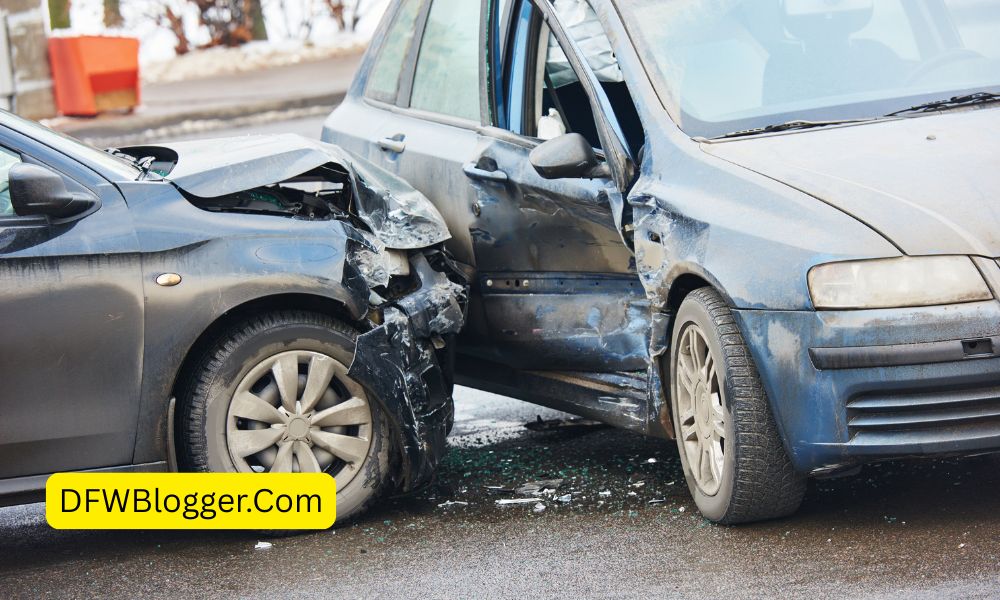
The DFW highways aren’t your personal video game. You DO NOT have the right to speed, weave in and out, around other cars just because you want to arrive ten minutes earlier. You are causing financial hardships and family heartbreaks among your neighbors.
And It Doesn’t Have to Be This Way
You felt it, right? You’re doing exactly the posted limit on LBJ, I-30, 75, or the George Bush, and suddenly it’s like you’re a cone in a slalom — cars flying past at 15–30 mph over, tailgating, darting across three lanes to make an exit they knew was coming ten miles ago. The speed limit exists for a reason: it’s the line where traffic engineers balance flow with the physics of stopping distance, reaction time, crash energy, and the messy reality of mixed human behavior. Blow past that line, and the margin for error disappears.
This isn’t a “grumpy driver” rant. It’s a public-safety and pocketbook problem in DFW and across Texas, measurable in funerals, hospitalizations, and billions of dollars in economic loss.
What the Numbers Say About DFW (and Texas)
Let’s start with official data — the kind collected from every police-reportable crash in Texas.
Dallas County (2023): 52,449 total crashes, 338 fatalities, and thousands of injuries across severity levels. Speed involvement alone contributed to 13,211 crashes and 135 deaths in the county. (Texas Department of Transportation)
Tarrant County (2023): 29,119 total crashes, 217 fatalities. Speed involvement accounted for 7,909 crashes and 90 deaths.
Statewide context (2023): Texas recorded 4,291 traffic deaths. That’s 1.42 deaths per 100 million vehicle miles traveled — still far too high, even after a modest improvement from 2022. (Texas Department of Transportation)
How much does it all cost? Nationwide, motor-vehicle crashes cost society $340 billion in a single year (2019) — covering medical bills, lost productivity, emergency response, insurance overhead, property damage, congestion, and more. Taxpayers directly shouldered roughly $30 billion, or about $230 per U.S. household. (Crash Stats, NHTSA)
Speed’s specific toll in Texas (latest campaign data): In 2024, speed contributed to nearly 160,000 crashes and 1,467 deaths statewide — roughly 35% of all traffic fatalities in Texas. That’s not a vibe; that’s math. (Texas Department of Transportation)
 Those are the stakes. And they match what you feel when you try to obey the law on a DFW freeway and end up swimming upstream in a school of sharks.
Why Speeding Turns Ordinary Highways Into Obstacle Courses
Physics wins
Kinetic energy increases with the square of speed. A crash at 80 isn’t “a little worse” than one at 65 — it’s brutally worse. Stopping distances stretch, and every surprise (a merging pickup, a blown retread, a sudden brake light two lanes over) becomes a potential chain-reaction.Human limits don’t scale
Brains don’t process complexity faster just because our right foot is heavier. At 75–85 mph in dense traffic, mirrors, blind spots, and lane-change gaps compress to milliseconds. One driver’s last-second swerve becomes everyone else’s emergency.DFW geometry and churn
Our interchanges (Mixmaster, High Five, the 635 rebuild), frontage roads, and left-exit oddities demand forethought. When drivers speed, miss the cue, and then force a late move, the whole network gets turbulent. The faster the flow, the more violent the turbulence.Illusion of time savings
The difference between 65 and 80 over a 15-mile commute is minutes — often single-digit minutes — and you’ll likely hand those back at the next bottleneck. Meanwhile, your risk exposure spikes.
The Hidden Bill We All Pay
 Even if you’ve never been hit, you are paying — in taxes, premiums, and delays:
Taxpayer burden: About $30 billion of the national crash costs in 2019 fell directly on taxpayers — the equivalent of $230 per household. (NHTSA)
Congestion and productivity: A single major freeway crash can snarl multiple corridors for hours. Those lost worker-hours and missed deliveries roll right into prices and payrolls. (NHTSA includes congestion and workplace losses in the $340B figure.) (Crash Stats)
Insurance pressure: More and larger claims push premiums up for everyone, not just the speeders who triggered them. (That pass-by at +25 mph is debiting your renewal.)
“Everybody Speeds” Isn’t a Defense — It’s a Dangerous Culture
We sometimes treat the limit as a suggestion and assume “the real limit” is 10–15 over. But that social fiction collapses under DFW volume. When thousands drive at “their” speed, the variance between the cautious and the reckless widens — and variance is what creates conflict points. You felt it: law-abiding drivers become obstacles purely because others decided the law is optional.
What DFW Is Trying (and Where It Needs to Go)
Dallas adopted a Vision Zero approach: eliminate traffic deaths and cut severe injuries in half, recognizing that streets should forgive human error instead of punishing it with tragedy. The City’s plan focuses on data-driven engineering, speed management, and targeted enforcement. That’s the right direction — but it needs public buy-in. (Dallas City Hall, dallasopendata.com)
At the state level, TxDOT’s “Be Safe. Drive Smart.” and “Operation Slowdown” campaigns have been explicit: speeding is a top killer. The 2024 numbers (1,467 speed-related deaths) underscore that this isn’t moral panic; it’s the leading edge of the harm curve. (Texas Department of Transportation)
The Everyday Safety Playbook for DFW Drivers
Pick a lane discipline and stick to it. Left lanes are for passing; middle/right lanes are for through travel. Cut the weave, cut the chaos.
Signal like it matters — because it does. In dense, fast traffic, your blinker is the only heads-up most drivers get.
Look three moves ahead. If your exit is 2 miles away, start working right now — not at the gore point.
Space is grace. Two seconds is the bare minimum following distance at highway speed; three is better. At 70+, you’ll need every yard.
Let the tailgater go. It isn’t a pride contest. Change lanes, let them pass, and keep your day intact.
Watch for speed differentials. The danger isn’t only absolute speed; it’s the sudden 20-mph gap between vehicles in adjacent lanes.
How many people must die before you slow down?
 We can put a face and a family behind every number above: 338 Dallas County deaths in 2023, 217 in Tarrant County, along with thousands of life-altering injuries. Now fold in that more than one in four Texas traffic deaths involve an impaired driver, while speed alone was linked to 1,467 Texas deaths in 2024 — over a third of all fatalities. The pattern is crystal clear: when we normalize 10–30 mph over the limit, we normalize funerals, amputations, spinal injuries, and traumatic brain injuries. And for what? For a handful of minutes that most drivers immediately lose back at the next interchange, wreck scene, or red wave.
Slowing down is not just obedience to a sign — it’s the only decision that guarantees you’ll have margin when a ladder falls off a truck, when a box truck drifts, when the car ahead panic-brakes because someone cut across three lanes to make the exit. The speed limit is society’s pact to keep the worst day of your life from happening to you or to the family in the minivan beside you.
If you are running 15 minutes late, then leave the house 15 minutes earlier.
It sounds glib, but it’s the most practical crash-avoidance strategy you’ll ever use. Chronic lateness is a root cause of chronic risk-taking: rolling stops, aggressive merges, and, yes, routine speeding. But here’s the kicker — in metro traffic, the “time you think you’re saving” by speeding rarely materializes:
On a 20-mile trip, the difference between averaging 60 mph and 70 mph is about 2 minutes and 51 seconds. At 75, it’s 4 minutes. One crash, one queue at the High Five, and your “savings” vanish.
Stress costs time. Aggressive driving spikes cortisol and narrows attention. Missed exits and over-corrections are time-losers, not time-savers.
Planning beats risk. Add buffer to your departures. Use a routing app that accounts for real-time incidents. Park a little farther and walk. Build an extra five minutes for the elevator and badge check.
Leaving earlier is less about punctuality and more about reclaiming control. When you aren’t rushed, you’re predictable. Predictable drivers are easy to drive around — and far less likely to trigger (or get caught in) the chain-reaction crash everyone else will stew in for an hour.
What Leaders and Agencies Can Do (And What We Should Ask For)
Targeted, visible speed enforcement at known hot spots
Consistent enforcement resets expectations. A few well-publicized waves on corridors with high serious-injury densities can move the needle quickly.Speed management through design
Long, straight, over-wide lanes invite 85+ mph. Narrower lane markings, better visual friction, and ramp metering can dial down operating speeds without gridlock.Data transparency
TxDOT and cities already publish rich crash data. Keep it easy to access and locally granular so communities see where and why the worst harm happens — and can track progress. (Texas Department of Transportation)Public campaigns that frame speeding as antisocial
Seatbelts didn’t become universal through tickets alone; culture shifted. Speeding needs the same treatment: “It’s not cool. It’s reckless. It hurts your neighbors.”
What You Can Do Tomorrow
Pick your speed — and own your lane. If you commit to the limit, stay steady, stay right when practical, and don’t escalate confrontations.
Adopt a “no last-second moves” rule. Missing an exit is cheaper than a collision.
Treat your buffer like sacred time. Block out the 15-minute cushion. You’ll arrive calmer, and paradoxically, often sooner.
Model it for your circle. Your kids, coworkers, and friends absorb your norms. Normalize leaving early and cruising the limit.
The Bottom Line
DFW’s highways don’t have to feel like obstacle courses. The data are unambiguous: speed kills and injures at a staggering scale in our region, and we all pay — with lives, with health, with taxes and insurance, with hours lost to preventable pileups. The speed limit isn’t an arbitrary suggestion; it’s the hard-won boundary where safety and mobility can coexist.
We don’t need to accept the idea that “everybody speeds.” Cultures change — and they change fastest when ordinary people decide to behave differently, backed by leaders who design and enforce for the common good. The fix is refreshingly simple:
Slow down. Leave earlier. Live longer.
Sources & Data Notes
TxDOT — Texas Motor Vehicle Traffic Crash Facts, 2023 (statewide fatalities, rates). (Texas Department of Transportation)
TxDOT — 2023 Crashes & Injuries by County (Dallas & Tarrant county totals and injury breakdowns). (Texas Department of Transportation)
TxDOT — 2023 Speed-Involved Crashes & Injuries by County (Dallas & Tarrant speed-involved crashes and fatalities).
NHTSA — The Economic & Societal Impact of Motor Vehicle Crashes, 2019 (national $340B cost; components). (Crash Stats)
NHTSA Press Summary (2019 cost; taxpayer share) and TxDOT 2024 speed campaign (160k speed-related crashes; 1,467 deaths; ~35% of fatalities). (NHTSA, Texas Department of Transportation)
(County totals include all roads in the county, not just within Dallas or Fort Worth city limits. Figures reflect crashes processed by TxDOT as of April 2025 for calendar year 2023.)